Springtails for Sale UK
Yes - you can buy springtails in the UK, and every culture on this page ships nationwide. We breed our springtails here in the UK, send them out in their established substrate, and back every order with a live arrival guarantee and a 20% overcount as standard. Orders post Monday to Thursday, so livestock never sits in a weekend depot.
Springtails (class Collembola) are the other half of a working bioactive cleanup crew. While isopods process leaf litter and larger debris, springtails handle what isopods can't reach - mould, fungal growth, bacterial films, and fine organic matter in the substrate. A healthy colony in a reptile, amphibian or planted vivarium means less mould, fewer fungus gnats, and a substrate that actively maintains itself.
Why Keepers Buy Springtails
Springtails are bought for three jobs, and most keepers want all three at once:
- Mould control. They graze mould and biofilm before it takes hold, which is the single most common reason a new bioactive setup fails.
- Live food. They're a staple feeder for dart frogs, mourning geckos and small juvenile reptiles - a colony in the vivarium produces food continuously without you doing anything.
- Substrate health. They break down fine organic matter that isopods leave behind, keeping the substrate biologically active rather than turning stagnant.
They're also the cheapest insurance you can buy for a humid enclosure. A culture costs a fraction of the livestock it protects, breeds continuously once established, and you generally only need to buy it once.
Species We Stock
We keep cultures across a range of genera - from the bulletproof standard species every bioactive keeper should have, to rare coloured morphs that are actually visible in your tank:
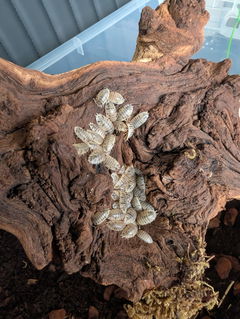
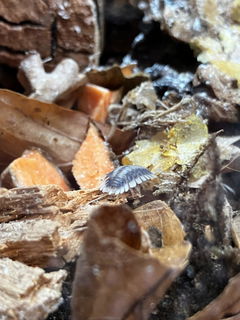
- Temperate Springtails (Folsomia candida) - the workhorse white springtail. Hardy, prolific, tolerates UK room temperatures, and the standard choice for most bioactive setups.
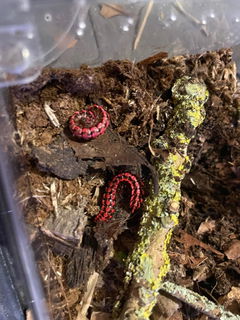
- Thai Red Springtails (Lobella sp.) - large, candy-red, non-jumping springtails from Thailand. Genuinely visible against dark substrate.
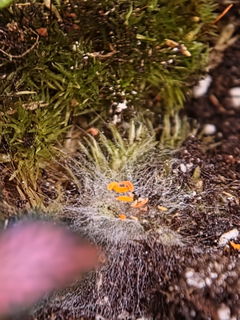
- Orange Springtails (Yuukianura aphoruroides) - vivid orange, non-jumping, slow-moving. A budget-friendly alternative to Thai Reds for keepers who want visible microfauna.
- Orange Springtails (Bilobella braunerae) - a separate orange species with similar colouration but different taxonomy. We list both because they are genuinely different animals.
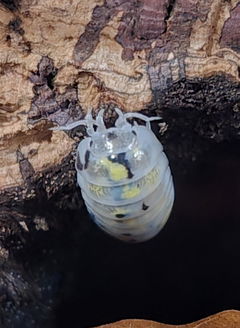
- Lilac Springtails and Lilac & Yellow Springtails - purple-hued Ceratophysella sp. from Thailand, rare and striking in planted setups.
- Yellow (Albino) Springtails (Ceratophysella sp.) - cream-yellow colour morph, easy to culture and prolific.
- Snowflake Springtails (Onychiuridae sp.) - pure white, cold-tolerant, effective in cooler setups where tropical species struggle.
Not sure which to pick? Try a Springtail Mystery Box, or read our guide to building a bioactive cleanup crew.
How Many Springtails Do You Need?
For a standard vivarium or terrarium, one starter culture is enough. Springtails aren't stocked by numbers the way isopods are - you're seeding a population, not buying a headcount. A single culture introduced into a damp, food-rich substrate will multiply into the thousands within a few months and then self-regulate to whatever the enclosure can support.
You can't realistically overstock them. If the population outgrows the available food, it simply drops back. For a large enclosure, or one already fighting a mould problem, two cultures will establish faster - but one is the normal starting point.
Springtails or Isopods?
It isn't really a choice - they do different jobs, and most bioactive setups want both. Isopods process leaf litter, rotting wood and larger waste. Springtails work at a scale isopods can't, grazing mould, biofilm and fine particulate matter in the top layer of substrate. Isopods are the visible display animal; springtails are the invisible maintenance crew.
If you can only start with one, start with springtails - they establish faster, cost less, and prevent the mould blooms that kill new setups. Then add isopods once the enclosure has settled.
Frequently Asked Questions
Can you get springtails in the UK?
Yes. Springtails are widely available to buy in the UK as live starter cultures for bioactive vivariums and terrariums. Every culture on this page is bred here in the UK, ships nationwide, and arrives in its established substrate with a live arrival guarantee.
Where do I buy springtails?
From a specialist UK invertebrate breeder rather than a general pet shop - you want cultures that are actively breeding and shipped in their own substrate, not scraped into a bare tub. We breed all our springtails in the UK and dispatch Monday to Thursday so nothing sits in a weekend depot.
Why would someone buy springtails?
Three reasons: they eat mould and biofilm before it can take over a humid enclosure, they're a staple live food for dart frogs and small geckos, and they keep the substrate biologically active. They're the standard cleanup crew for any bioactive reptile, amphibian or planted setup.
How many springtails do I need for my terrarium?
One starter culture is enough for a standard terrarium or vivarium. You're seeding a population rather than buying a fixed number - a single culture will multiply into the thousands within a few months and then settle at whatever the enclosure supports.
Can you put too many springtails in a terrarium?
No. Springtail populations self-regulate to the available food and moisture. If numbers outgrow the food supply, the population simply falls back. You can't realistically overstock them, and they won't harm your plants or animals.
Which is better, isopods or springtails?
Neither - they're complementary, not interchangeable. Isopods process leaf litter and larger debris; springtails handle mould, biofilm and fine matter that isopods can't reach. Most bioactive setups benefit from having both. If you're starting with one, springtails establish faster and prevent the mould problems that sink new enclosures.
Are springtails easy to keep alive?
Yes - they're one of the most forgiving cultures in the hobby. Keep the substrate damp but not waterlogged, feed small amounts of brewer's yeast, fish flakes or rice every few days, and keep the lid on. Most springtails need humidity rather than ventilation; opening the lid to feed gives enough air exchange.
How often do springtails multiply?
Continuously, and quickly. A healthy culture produces new generations every few weeks and reaches population density in a couple of months. Once established in a vivarium a colony sustains itself indefinitely, which is why you generally only ever buy one.
What is the lifespan of a springtail?
Individually, several months to around a year depending on species and conditions. In practice the individual lifespan is irrelevant - a culture is a self-replacing population, and a well-kept colony keeps going for years.
How big are springtails in the UK?
Most cultured species are 1-3 mm, which is small enough to be inconspicuous in a vivarium. The coloured species we stock - Thai Red, Orange and Lilac - are at the larger end and genuinely visible against dark substrate, which is why keepers choose them for display setups.
Are springtails good or bad?
In a bioactive enclosure they're entirely beneficial - they eat mould, not plants or animals, and they're harmless to people and pets. Springtails found around a damp house are a different matter: they're still harmless, but they indicate a moisture problem worth fixing.
Are springtails insects?
No. They're hexapods in the class Collembola - a separate lineage closely related to insects but outside Insecta. Functionally they behave like tiny insects, but the distinction matters if you're researching them scientifically.
Do springtails jump?
Most do, using a springing organ called the furcula. Several species we stock - Thai Red and Orange Yuukianura - don't jump at all, which is useful if you want to open the enclosure without springtails pinging out of it.
Will springtails harm my plants?
No. Springtails eat decaying plant matter, mould and fungi - not healthy living tissue. They're safe in any planted vivarium or terrarium.
Can springtails be fed to dart frogs and small geckos?
Yes - they're a staple food for dart frogs, mourning geckos and juvenile reptiles. An established colony in the vivarium produces food continuously while keeping the setup clean.
Pair any of our springtail cultures with isopods for a complete bioactive cleanup crew, and browse our accessories for substrate and leaf litter. Not sure what combination suits your setup? Drop us a message before ordering - happy to advise.


Blog posts
View all