PostPods
Dairy Cow Isopods (Porcellio Laevis)
£2.50
£3.50
Originally from North Africa, Dairy Cow isopods are increasingly gaining widespread attention as a beginner-friendly pet. The name of these isopods itself generates curiosity among the public. Their black and white combination color and the bioactive potential are the two unique selling points of these great pods.
A Glimpse
Origin: North Africa
Scientific Name: Porcellio Laevis
Difficulty Level: Low
Size: Up to 2.3 centimeters
Rarity: Low
Temperature: 70F to 85F
Humidity: 50% to 70%
Favorite Foods: Anything except cucumbers and butternut squash
Dairy Cow Isopods: An Overview
Dairy cows are also are famously known by their scientific name, Porcellio Laevis. This easy-to-care isopod community is suitable for beginners and experienced pet lovers alike.
They are widely known for their cleaning capabilities. They are among the best clean-up crews on vivariums and terrariums. They can quickly and effectively break down organic matter and nourish the soil well.
The ability to break down organic matter makes these isopods the perfect companion pets for many other organisms. These isopods can develop a symbiotic relationship between almost all other forms of living things.
Dairy Cow Isopods: Basic Care
Beginners in isopod care can use the following pointers to provide adequate primary care for Dairy Cow isopods.
Dairy Cows are relatively active isopods. So, they need to have a reasonably spacious enclosure to live.
They are relatively large. Despite the size, it is straightforward to be taken care of, even by the beginners
The enclosure of Dairy Cow isopods has to have high humidity. But it is essential not to make the enclosure extremely wet.
The Dairy Cow isopod enclosure should always have a dry side. This enables the isopods to manage their heat requirement properly.
Dairy Cow isopods are prolific breeders. So, whenever they hit the breeding phase, sufficient food and other requirements have to be provided by the caregiver.
If the owner plans to develop the isopod collection into a community, they must introduce male and female Dairy Cow isopods in the enclosure.
During the breeding phase, protein is essential for Dairy Cows. The larvae can die off quickly if not supplemented with enough protein. So, enough protein supplements should be kept handy always by the owner.
Feeding
Being highly active and aggressive, the feeding habits and diet of these pods have to be given immense attention. They have a high appetite. Due to their high appetite, experts suggest not putting them in enclosures with smaller species.
The most common foods that Dairy Cows prefer to eat are decaying wood, leaf litter, etc. They also have a particular affinity towards vegetables like sweet potatoes. Some other vegetables that these isopods prefer to eat are as follows.
Mushrooms
Green beans
Peas
Hemp stalks
Carrots
Potatoes
Protein
Protein is extremely crucial for the overall health and reproductive capabilities of Dairy Cows. The best protein sources for these isopods are as follows.
Shrimp pellets
Shrimp shells
Shrimp meal
Dried crickets
Dried minnows, etc.
Calcium
Calcium is another essential element that must be added to the Dairy Cow diet. Calcium helps with the reproductive health, growth rate, and general well-being of the isopods. Some of the suitable calcium sources are as follows.
Powdered eggshells
Cuttlebone
Organic kefir
Sea coral
Leaf Litter
Leaf litter should be available in abundance in a daiy cow enclosure. The owner must pay special attention to providing pesticide-free leaves to the isopods. The best leaves for the Dairy Cow isopod diet are as follows.
Oak leaves
Magnolia leaves
Cannabis leaves
Hemp leaves, etc.
Dairy Cow Isopods: Appearance and Behaviour
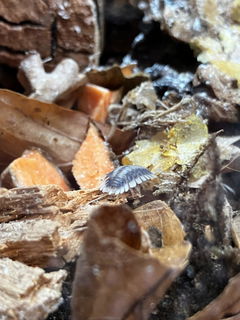
An adult Dairy Cow achieves a total body length of 2.3 centimeters. Despite the bigger size, they are highly active and fast. The body of the Dairy Cow isopods features a combination of black and white color. The pattern from black and white reminds the spectators of cows, which is why these isopods got their famous name.
Like any other isopod, these isopods also have a segmented body. As mentioned before, they are fast-moving and, thus, require a good deal of space inside the enclosure to move around.
Regarding behavior, Dairy Cows maintain an active and somewhat aggressive temperament. As they have a relatively bigger size in the isopod world, they physically push away other smaller isopods.
Experts also report that these isopods tend to push around even their juveniles. The bullying nature is mainly for getting more nutrients from others. Due to this bullying nature, Dairy Cow isopods are not considered great companion pets.
Dairy Cow Isopods: Habitat
Dairy Cows are much bigger than most other isopods. They are also highly mobile. Due to these reasons, they should have a reasonably big enclosure to inhabit.
Pet owners can use a reasonable-sized Tupperware container to accommodate the Dairy Cow isopods. Particular attention should be given to punch holes in the sides of the container for proper airflow.
While punching ventilation holes for the isopod enclosure, it is essential to ensure they are at unreachable heights for the isopods. Being highly active, Dairy Cow isopods can go out through the vent holes at accessible heights.
A good terrarium setup would be the right choice for culturing Dairy Cow isopods. Such setups have nutritious substrate surfaces, lots of leaf litter for consumption, and ample space to move around.
Dairy Cow Isopods: Substrate Mix
The substrate mix inside a Dairy Cow enclosure should have qualities like high moisture retention capacity, good aeration, and proper drainage.
A substrate mix of orchid bark and sphagnum moss will suit the pods. These elements can keep the humidity inside the enclosure high always. Earthworm castings are a great addition to the substrate mix for growing Dairy Cow isopods.
The critical thing to address while laying the substrate mix is that a part of the enclosure should always be dry. So, after laying the substrate mix, it is advisable to layer the designated dry area with soft bedding like peat moss or regular soil. It is also recommended to add several wood barks in the dry area for the isopods to hide.
The damp area of the enclosure should only need a small layer of leaf litter above the substrate mix. While using leaf litter, boil the leaves to get them adequately sterilized.
PostPods
Snow White Isopods (Porcellio Laevis)
£2.50
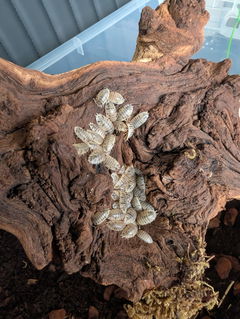
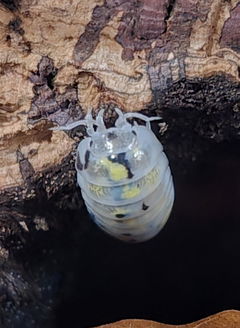
Snow White isopods or Porcellio laevis are species of terrestrial crustaceans of the Isopoda order. They are known for their striking white light grey colour, which resembles the snow, hence the name 'snow-white'. Their unique and attractive aesthetics stand in contrast to their environment. Due to their striking features and aesthetics, they are more prevalent in the exotic pet and bioactive vivarium communities.
Snow White Isopods: Outline
Origin: Central and South America
Scientific Name: Porcellio laevis
Maintenance: Low
Size: 2cm to 3cm
Rarity: Low
Temperature:60℉ to80℉
Humidity: 55% to 75%
Favourite Foods: Fruit, vegetables, fish food
Supplements: Cuttlebone (or calcium powder)
Snow White Isopods: Introduction
Snow White Isopods of the Crustaceans order are native to various regions, particularly Central and South America. These little creatures are diurnal. They are highly active during the daytime and are best for those studying nature and activities.
These speciesare also called clean-up crews. They keep the environment clean by feeding on decaying. Breaking down detritus and maintaining the ecosystem is one of the crucial role played by them.
Like most isopod species, Snow white isopods have an insatiable appetite; thus, they consume anything. Enthusiasts appreciate this as they consume decaying plant matter, fungi, and other organic debris, thus contributing to a healthy environment. When paired with springtails, they keep the bioactive clean.
Snow White Isopods: Characteristics
Snow white isopod adults can be 2-3 cm long.
They come in transparent white or light grey combinations resembling the colour of snow, hence the name.
Their white body makes them visually appealing.
Flat body with a smooth white exoskeleton.
They are primarily detritivores, i.e. they get nutrition by consuming rotten plants and animals.
They have a voracious appetite and eat almost everything.
While consuming food, they take their food into their burrows to eat peacefully.
These species are diurnal; watching them during the daytime is pretty enjoyable.
They are one of the larger isopod species.
Due to their large body, they try to dominate over smaller species.
They must be paired with other large isopod species as they may consume tiny ones.
They are easy to care for and are highly adaptable to the environment they are in.
Easy to breed if kept at an optimal temperature.
They can be fed anything like fruits, small fish, etc.
Easy to maintain and is beginner and child-friendly.
Snow White Isopods: Food and Diet
Snow white isopods are detritivores in nature. People underestimate their appetite, thinking they eat little, but these creatures have a voracious appetite.
Another joint mistake owners also make is overfeeding them. Overfeeding attracts fungus, gnats, mites and fruit flies. Therefore, feeding only enough food that these isopods can finish a single session is crucial.
Snow White isopods are very active; therefore, they require protein and calcium at least two times a week. Cuttlebone, crushed limestone, and eggshells are fed to keep them healthy. Large-sized food like fish and pink mice is given in large colonies. Protein, calcium and vegetables- this rich diet is essential for their health.
Snow White Isopods: Breeding
Highly prolific in large colonies
Reproduction age starts early. i.e. don't have to grow to its adult stage to reproduce
Offsprings develop quickly within 7-8 months.
The process involves a mechanism called 'Pouching.'
Females carry their eggs in a specialised pouch until they hatch into offspring.
They can produce offspring in both natural and captive environments.
Snow White Isopods: Environment Care
Snow white isopods share similarities with other species regarding habitat and care. They thrive in moderate to highly humid environments with proper ventilation systems. Maintaining the substrate with a humidity gradient of wet and dry areas allows them to regulate their hydration level.
Initially, for these species to get familiar with the enclosure, it is better to keep the Snow White isopods in a small container box. Once they get acquainted with the atmospheric conditions, shift them into a well-ventilated acrylic or glass container. It is essential to have cross ventilations in the enclosure to maintain the ideal temperature for the species to breed.
Additionally, provide various options and substrates for them to burrow deep. Providing wide varieties of decaying organic matter like rotten whitewood, dried leaves, wood bark, sphagnum moss, etc.
High humidity inside the enclosure often invites unwanted guests like gnats, mites, fruit flies, etc. To prevent unwanted pests and fungus, pairing the species with springtails will keep the environment clean.
Snow White Isopods exhibit excellent health and breeding if kept at an optimal temperature of 60° F to 80° F.
Snow White Isopods: Substrate
Creating an ideal substrate mix for Snow White isopods is crucial. It ensures their well-being, reproduction and overall environmental health. Their habitat has to mimic the natural environment, which includes providing a balance of moisture, organic matter and proper ventilation.
The primary substrate for Snow White isopods consists of a mixture of coco peat, peat moss and organic leaf litter. The coco peat keeps the moisture in the enclosure, maintaining a humid environment, while peat moss contributes to the overall structure of the substrate. They aid in maintaining appropriate moisture levels. These two components provide a suitable habitat for the Snow White Isopods to burrow and explore.
Organic leaf litter provides food for these species and creates a natural environment. The Bark of the Oak tree and whitewood bark are commonly used as they break down slowly, providing a continuous source of nutrition. This bark also provides the isopods to hide, adding to the terrarium's aesthetics.
In addition to these primary components, adding a layer of sphagnum moss can enhance moisture retention and create a microclimate within the substrate enclosure. This is crucial for the Snow White isopods, who prefer humid environments.
Ventilation is necessary to maintain a proper balance in moisture. Regular misting helps to keep the substrate moist. Holes for ventilation are provided to prevent the enclosure from excess humidity. The substrate humidity gradient has to be in a way that it is both damp and dry.
Protein supplements are necessary for these creatures; therefore, earthworm bits are limestone mixed or calcium supplements mixed with the substrate to ensure their health.
In conclusion, a well-balanced substrate mix constitutes all the above elements that support their physical health and mimic nature, thus encouraging their natural behaviour. This captive environment makes the Snow White isopods thrive in the artificial environment.
PostPods
Giant Orange Isopods (Porcellio Laevis)
£3.50
This is Porcellio laevis "Orange" - a classic hardy species and one of the best beginner isopods available. The current description mentions coconut coir in the substrate section which I'll remove. At £3.50 for 10, this is excellent value for a genuinely useful, attractive species.
Porcellio laevis "Orange" (Giant Orange Isopods) is one of the hobby's most reliable and versatile species. This vibrant orange morph of the smooth-bodied laevis offers everything a keeper could want: hardiness, prolific breeding, attractive colouration, and genuine functionality as bioactive cleanup crew. Originally from Europe (possibly North Africa), they've become a worldwide staple in the isopod hobby for good reason. At £3.50 for 10, they represent outstanding value—particularly for keepers needing large populations for bioactive setups or as feeder colonies.
A Glimpse
Origin: Europe (possibly North Africa originally)
Scientific Name: Porcellio laevis "Orange"
Maintenance required: Low
Average Size: 1.8-2.3 cm
Rarity: Low (widely available)
Lifespan: Up to 2 years
Temperature: 16-32°C (60-90°F)
Ventilation: Medium to High
Humidity: 55-75%
Favorite food: Vegetables, decaying organic matter, leaf litter
Supplements: Cuttlefish bone, crushed limestone, oyster shell
Porcellio laevis Orange: Introduction
Porcellio laevis is one of the most established species in the isopod hobby, and the Orange morph combines that proven reliability with genuinely attractive colouration. The bright orange carapace with subtle white highlights makes them visually appealing while retaining all the hardiness that makes standard laevis so popular.
Their common name "Giant Orange" is slightly misleading—they're not giant compared to species like P. expansus or P. hoffmannseggii. At 1.8-2.3cm, they're moderate-sized. However, they're larger than many commonly kept isopods, and their robust, active nature makes them feel substantial.
What distinguishes laevis from many species is their combination of traits: they're hardy across a wide temperature range, breed prolifically, have large appetites that make them excellent cleanup crew, and their calcium-rich exoskeletons make them valuable as feeders for reptiles and amphibians. The Orange morph adds visual appeal without sacrificing any of these practical advantages.
They're sometimes described as "aggressive," which deserves clarification. They're not aggressive toward keepers or in a dangerous sense—they're simply bold, active isopods that compete effectively for food. Adult laevis will outcompete smaller or more timid species at feeding time. This assertiveness is actually advantageous in bioactive setups where you want effective waste processing.
Porcellio laevis Orange: Physical Traits and Characteristics
Adults reach 1.8-2.3 cm
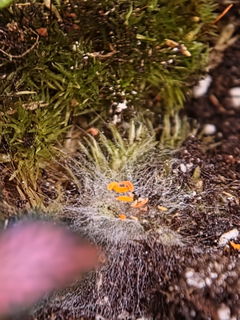
Distinctive bright orange colouration with subtle white highlights
Smooth, glossy exoskeleton (the "laevis" name means "smooth")
Flat, rounded body shape
Cannot fully conglobate—body shape prevents complete rolling
Calcium-rich exoskeleton (important for feeder use)
Fast-moving and active compared to many species
Sexual dimorphism present: males more slender, females broader with visible brood pouch when mature
The smooth, flat body and bright orange colour make them immediately recognisable. Under good lighting, their glossy carapace is genuinely attractive.
Behaviour
Porcellio laevis Orange are notably active, bold isopods.
Activity patterns: Diurnal—unusually for isopods, they're active during the day rather than strictly nocturnal. This makes them more visible and enjoyable to observe than many species that hide constantly.
Temperament: Bold and confident. They don't hide as much as shy species and will actively explore their enclosure. They're assertive at feeding time—adults will push past smaller or more timid isopods to access food.
Feeding behaviour: Large appetites. They're enthusiastic eaters that process waste efficiently, making them excellent bioactive cleanup crew. Their willingness to eat makes them reliable—they won't ignore waste the way pickier species might.
Competition: Their bold, assertive nature means they can outcompete more timid species. In mixed-species setups, consider whether tank mates can hold their own at feeding time.
Speed: Fast-moving compared to many isopods. They're not sluggish—expect quick movements when disturbed or when food is offered.
Social behaviour: Social and tolerant of crowding. Large colonies function well together, though ensure adequate food supply for growing populations.
Diet
Porcellio laevis Orange have large, unfussy appetites.
Primary foods:
Decaying leaf litter (oak, beech, and similar hardwoods)
Rotting hardwood and white-rotted wood
Decaying organic matter
Shed skins from reptiles and invertebrates
Supplementary foods:
Vegetables: sweet potato, carrot, courgette, squash
Mushrooms
Fish flakes for protein
Dried shrimp
Greens and vegetable scraps
Calcium requirements: Higher than many species due to their calcium-rich exoskeletons. Provide cuttlefish bone, crushed limestone, oyster shell, or calcium powder generously. Adequate calcium is particularly important if breeding colonies for feeder use.
Protein requirements: Regular protein supplementation supports growth and breeding. Fish flakes, dried shrimp, or fish meal work well. Offer protein-rich foods at least twice weekly given their active metabolism.
Feeding approach: They eat enthusiastically and can consume significant amounts. Ensure adequate food supply, particularly in large or growing colonies. Adults may outcompete juveniles for food—distribute food in multiple locations to ensure all individuals can feed. Remove uneaten fresh food to prevent pest attraction.
Porcellio laevis Orange: Breeding
Laevis are prolific breeders—one of their key advantages.
Breeding rate: Fast. Once established, colonies grow rapidly. They begin reproducing before reaching full adult size, accelerating population growth.
Sexing: Males are more slender than females. Mature females display a visible white marsupium (brood pouch) between their legs. Males have enlarged reproductive organs visible on close inspection.
Breeding behaviour: Males engage in courtship behaviour before transferring sperm packets to females. Females carry fertilised eggs in their abdominal pouch, where embryonic development occurs. Fully developed juveniles emerge ready to explore independently.
Colony growth: Expect rapid population increase under good conditions. This makes them excellent for establishing large cleanup crews or feeder colonies quickly.
Tips for success: Maintain adequate food supply—growing colonies can outpace food availability. Ensure sufficient calcium for breeding females and developing juveniles. Their hardy nature means breeding success is reliable with basic care.
Porcellio laevis Orange: Habitat Setup
Their adaptability makes habitat setup straightforward.
Enclosure: Plastic containers with ventilated lids work well for culturing. Start with smaller containers for new colonies and upsize as populations grow. Good ventilation is important—they prefer airflow more than humidity-dependent species.
Substrate: Use a moisture-retaining substrate that supports their burrowing behaviour:
Organic topsoil as a base (pesticide-free)
Sphagnum peat moss mixed in for moisture retention
Crushed limestone or calcium powder throughout
Leaf litter layered on top
Decaying hardwood pieces
Substrate depth of 8-10cm (3-4 inches) allows burrowing. They enjoy digging, so provide adequate depth.
Humidity: 55-75%—they prefer damp conditions but tolerate more variation than sensitive species:
Maintain a moisture gradient (one side damp, one side drier)
Mist one side of the enclosure to create the gradient
Allow isopods to move between wet and dry areas as needed
Good ventilation prevents stagnation while maintaining appropriate moisture
They need moisture for hydration but aren't as humidity-dependent as tropical Cubaris species.
Ventilation: Medium to high ventilation. They appreciate airflow. Small holes around container walls (above substrate level to prevent escapes) provide adequate ventilation while maintaining humidity.
Décor and hides:
Cork bark pieces
Coconut shell halves
Egg carton sections
Moss patches (serves as hiding spot and food)
Multiple hides distributed throughout
Provide hiding options for both juveniles and adults. Multiple locations reduce competition for shelter.
Temperature: 16-32°C (60-90°F)—remarkably tolerant of temperature variation. They handle both cooler and warmer conditions than many species. Room temperature in UK homes works year-round without supplemental heating in most cases.
Springtails: Recommended companions. Springtails consume mould that can develop in humid areas, helping maintain enclosure hygiene. They coexist peacefully with laevis.
Bioactive Use
Porcellio laevis Orange excel as bioactive cleanup crew.
Ideal applications:
Reptile bioactive enclosures (bearded dragons, leopard geckos, skinks, etc.)
Amphibian setups
Invertebrate enclosures
Planted vivariums
Any bioactive system needing efficient waste processing
Advantages:
Large appetites mean effective waste processing
Hardy across wide temperature and humidity ranges
Prolific breeding maintains populations
Active daytime behaviour increases visibility
Attractive orange colouration
Affordable pricing allows large starter populations
As feeders: Their calcium-rich exoskeletons make them excellent feeders for reptiles and amphibians. Prolific breeding supports sustainable feeder colonies. Their moderate size suits many predator species.
Considerations:
Their assertive nature means they may outcompete timid species
Fast movement may startle some animals initially
Ensure adequate food supply to prevent them seeking alternative food sources
Suitability
Porcellio laevis Orange suit virtually any keeper.
Excellent choice for:
Complete beginners (ideal first species)
Bioactive setup cleanup crews
Feeder colony establishment
Keepers wanting low-maintenance species
Anyone wanting attractive, affordable isopods
Large-scale bioactive projects needing bulk populations
Children's first isopod experience
Potential considerations:
May outcompete timid species in mixed setups
Bold, fast nature might not suit keepers wanting shy, slow species
Not suitable if you want rare or challenging species
Care level: Very low difficulty. They're genuinely hardy and forgiving of mistakes. Temperature fluctuations, minor humidity variations, and occasional neglect won't devastate colonies the way sensitive species would suffer. Perfect for beginners learning isopod husbandry.
Value assessment: At £3.50 for 10 (with bulk pricing available), they're exceptional value. The combination of attractive appearance, practical utility, and prolific breeding makes them genuinely useful rather than just cheap. Keepers establishing bioactive setups can purchase larger quantities without significant expense, ensuring populations establish quickly.
Compared to other beginner species: Similar care requirements to P. scaber but with more striking appearance. More active and visible than many species. Larger than Dairy Cows (P. scaber "Dalmatian") but similar hardiness. An excellent alternative or complement to other beginner-friendly Porcellio.
Expectations: Expect hardy, active isopods that breed reliably and eat enthusiastically. Expect attractive orange colouration that adds visual interest to enclosures. Expect minimal problems—these are genuinely easy isopods that reward basic care with thriving, growing colonies. Don't expect them to hide constantly or be shy—their bold, diurnal nature is part of their appeal.
PostPods
Porcellio werneri (Greek Shield Isopod)
£17.50
£25.00
Porcellio Werneri isopod, aka Space Pods or Greek Shield isopod, is famous worldwide for its one-of-a-kind shape, colour, etc. This relatively bigger isopod is known for its mild temperaments and compatibility with many climates.
Porcellio Werneri isopods serve purposes like cleaning, aerating the soil, etc., and thus, are in high demand as terrarium pets. These egg-laying species are reasonably easy to care for. You only need a two to five-gallon big container or tank to rear a small community of Porcellio Werneri isopods effectively.
A Glimpse
Origin: Greece
Scientific Name: Porcellio Werneri
Difficulty Level: Moderate
Size: Up to two centimeters
Temperature: 17 to 26°C
Humidity: 50 to 65%
Favourite Foods: Decaying leaves, fruits, vegetables, etc.
An Overview
Porcellio Werneri are a relatively large, seasonally breeding isopod from Greece. These isopods are noted for their unique body shape. They are flat, round, and look very similar to a feather. This unusual-looking isopod is popularly sold worldwide as it poses only moderate difficulties to the owners.
These pods feature a dark grey color that often crosses into black on significant parts of their body. The outer edge of the body features a milk-white color. These isopods are also known by names like Greek Shield, Werner's Woodlouse, Pancake isopods, etc.
Porcellio Werneri requires a good amount of airflow to survive in any enclosure or habitat. Experts recommend keeping at least one-fourth of a Porcellio Werneri enclosure moist to help it stay better.
They also require a heavy Calcium diet. Caregivers are expected to provide Calcium and protein supplements to these isopods regularly. Porcellio Werneri isopods exhibit seasonal breeding. So, the juveniles can only be seen during a fixed time every year.
Basic Care
These isopods are non-aggressive creatures that can live up to four years with proper care.
They maintain a detritivore diet. So, the caregiver should provide them with vegetables, fruits, and decaying organic matter regularly.
Caregivers can facilitate breeding among the Porcellio Werneri isopods by putting the female and male together. But as they are seasonal breeders, the possibility for breeding is limited to two times a year.
Ensure your enclosure is well sized as these isopods can be teritorial and they may fight if they are not spaced adequatley
The younger ones remain in the larvae stage for several months. They need abundant food during this phase. So, the caregiver should be prompt with the diet cycle.
Good attention should be provided to humidity-related issues that can affect the health of these isopods. Such issues are the significant reasons for fatalities among these isopods.
They need a reasonable amount of moisture content. Their natural habitats are usually by high moisture-containing river banks and stream shores.
Feeding
Being detritivores, these isopods have a diet that primarily consists of dead and decaying matter. They prefer dried leaf litter over fresh leaves. Some of the favorite foods of Porcellio Werneri isopods are as follows.
Fruits
Vegetables
Greens
Fish foods
Decaying leaves
Rotting wood
Molting of reptiles and invertebrates
It is advisable to give them protein supplements now and then to maintain their overall health. The correct frequency to provide protein supplements to greek shields is twice a week. The best protein sources for them are as follows.
Fish flakes
Dried minnows
Dried shrimp
Calcium is another staple element that Porcellio Werneri isopods need to have in their daily diet. There are different Calcium sources available that can provide ample amounts of Calcium.
Some of them are as follows.
Cuttlefish bones
Limestone
Oyster seashell
Limestone rock
Crushed eggshells
Appearance and Behaviour
Porcellio Werneri isopods are also known as Greek Shield isopods due to their unique appearance. They look very similar to a warrior’s armor shield. They are flat and oval-shaped.
They usually maintain a deep grey body. The grey can sometimes appear like black. At the outer edge of the body, they also have a white shade. At a single glance, the white part looks like a skirt around the Porcellio Werneri isopods’ bodies.
P. Werneri isopods are relatively bigger than the other regular isopods. The adult Porcellio Werneri isopod can reach up to two centimeters. Their heads have two long antennae.
The exoskeleton ofWerneri isopods is divided into seven different segments. Each segment contains a pair of small legs. The last pair of legs on the last segment of these isopods’ body is much bigger and stronger than the other legs.
As far as behavior is concerned, P. Werneri isopods are barely aggressive. They are relatively mild, and the caregiver can even hand-feed them once comfortable. They usually hide from other bigger creatures.
On co-existing conditions, Porcellio Werneri isopods exhibit territorial behavior. They usually do not get aggressive against other animals and show a fair amount of tolerance.
Porcellio Werneri Isopods: Habitat
At least 1/3rd of the enclosure should be moist for culturing Porcellio Werneri isopods.
The enclosure for P. Werneri isopods should have enough air vents, as they require high airflow to survive.
When culturing Porcellio Werneri isopods with other species, it is advisable to use enclosures with ample space. Porcellio Werneri isopod males can get very protective and territorial of their area, and having enough room inside the enclosure is thus crucial.
For starter colonies of Porcellio Werneri isopods, a 12-liter container can be enough.
For large Porcellio Werneri isopod colonies, a 25-liter container will be more than enough.
The temperature inside the enclosure should be kept between 17 and 26 degrees Celsius.
The humidity inside the enclosure should be between 50% to 65%. The enclosure should not be kept completely dry.
Substrate Mix
The substrate mix for Porcellio Werneri isopods should contain an ample amount of organic matter. A combination of coconut fiber plus peat moss would suit these isopods. The substrate soil should retain moisture content for quite a while. But it should not be dripping wet, either.
Along with the substrate mix, you can supplement a Porcellio Werneri isopod tank with the following elements.
Cork bark
Leaf litter (pesticide-free)
Lotus seed pods
Egg crates (for hiding)
PostPods
Lava Isopods (Porcellio Scaber)
£12.50
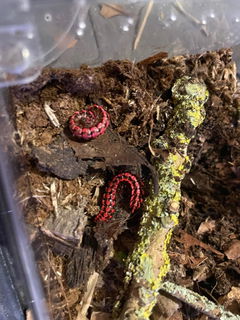
Porcellio scaber "Lava" is a colour morph of the common rough woodlouse displaying striking red, orange, and black patterning across their exoskeleton. The name comes from their resemblance to cooled lava flows—dark base colouration with fiery orange and red markings breaking through. Native to Europe and found commonly across Portugal and Spain, P. scaber is one of the hardiest isopod species available. The Lava morph adds genuine visual interest to this already dependable species, giving keepers an attractive option that retains all the bulletproof qualities scaber is known for.
A Glimpse
Origin: Europe (common across Portugal, Spain, and throughout the continent)
Scientific Name: Porcellio scaber "Lava"
Maintenance required: Low
Average Size: 1.5-1.7 cm
Rarity: Low to Medium
Lifespan: 2-3 years
Temperature: 21-29°C (70-84°F)
Ventilation: Medium
Humidity: 50-80% (tolerant of variation)
Favorite food: Leaf litter, vegetables, decaying wood, mushrooms
Supplements: Cuttlefish bone, calcium powder
Porcellio scaber Lava: Introduction
Porcellio scaber is the classic "rough woodlouse" found throughout Europe and now established across much of the globe. It's one of the first isopod species most people encounter—the grey, bumpy-textured woodlouse hiding under plant pots and logs in gardens everywhere. The species has proven itself incredibly adaptable, surviving in conditions ranging from damp cellars to relatively dry garden walls.
The "Lava" morph takes this reliable species and adds visual appeal. The patterning combines dark grey or black base colouration with varying amounts of red and orange—some individuals show subtle hints of warmth, others display bold fiery markings. The effect genuinely resembles volcanic rock, and a colony of mixed individuals creates an attractive display.
What makes Lava isopods particularly appealing is that you get the hardiness of standard scaber with actual visual interest. Many beginner-friendly species look fairly plain; Lava offers something you can show people without needing to explain why they should be impressed.
They breed well, tolerate a wide range of conditions, and forgive the kind of mistakes that would devastate sensitive species. If you're new to isopods or want a reliable species that actually looks good, Lava scaber tick both boxes.
Porcellio scaber Lava: Physical Traits and Characteristics
Adults reach approximately 1.5-1.7 cm
Distinctive rough, textured exoskeleton (the "scaber" means rough in Latin)
Colour pattern combines black/dark grey with red and orange markings
Pattern intensity and distribution varies between individuals
14 legs for movement
Antennae used to sense environment
Cannot fully conglobate (roll into a complete ball)—body shape prevents this
Segmented body with visible plating
Small, manageable size suits various enclosure types
The textured exoskeleton distinguishes scaber from smooth-bodied species like P. laevis. Combined with the lava colouration, they have a distinctive appearance.
Behaviour
Porcellio scaber Lava display typical scaber behaviour—active, adaptable, and easy to observe.
Activity patterns: Primarily nocturnal. They're most active during evening and night hours, though they'll move about during the day in dim conditions. During daylight, expect them to shelter under bark, leaves, and other cover.
Movement: They scuttle actively using their 14 legs, navigating over substrate and climbing vertical surfaces without difficulty. They're reasonably quick when disturbed.
Environmental response: They seek out appropriate humidity levels, moving between drier and damper areas of enclosures as needed. This self-regulation means they cope with humidity variation better than species requiring precise conditions.
Hiding behaviour: They'll find cover under leaves, bark, rocks, and other shelter during the day. Providing hiding spots helps them feel secure and behave naturally.
Survival skills: P. scaber has survived as a species by being adaptable. They handle temperature fluctuation, humidity variation, and less-than-perfect conditions better than most isopod species. This hardiness transfers directly to captive care.
Feeding: Not picky eaters. They'll consume most organic matter offered and don't require specialised diets.
Diet
Porcellio scaber Lava eat almost anything organic—they're genuine generalists.
Primary foods:
Leaf litter (oak, beech, and other hardwoods)
Decaying wood
Rotting plant matter
Bark
Vegetables:
Carrots
Potato
Spinach and leafy greens
Courgette
Sweet potato
Fruits (occasional):
Apple slices
Pear
Other soft fruits in moderation
Other foods:
Mushrooms (they particularly enjoy these)
Fish flakes for protein
Dried shrimp
Organic vegetable scraps
Calcium: Cuttlefish bone, crushed limestone, or calcium powder should be available constantly for healthy moulting.
Protein: Regular protein helps prevent cannibalism and supports colony health. Offer fish flakes, dried shrimp, or similar protein sources at least twice weekly.
Feeding approach: They're not fussy—most organic matter gets consumed. Maintain a base of leaf litter and supplement with vegetables and protein regularly. Their broad diet makes them easy to feed; you don't need specialised foods.
Porcellio scaber Lava: Breeding
Scaber breed reliably and consistently—one of their strongest points.
Breeding rate: Good. Colonies grow steadily under appropriate conditions. They're not explosive breeders like some Porcellio species, but populations build reliably over time.
Breeding requirements:
Moderate humidity (50-80%)
Stable temperatures within preferred range
Adequate calcium for gravid females
Sufficient protein in diet
Basic hiding spots for security
Colony growth: Expect steady population increase rather than sudden booms. Colonies grow at a manageable rate, making it easy to track progress and maintain appropriate densities.
Tips: Protein availability affects breeding success. Colonies with adequate protein breed more reliably and show less cannibalistic behaviour. Don't neglect the protein supplementation.
Porcellio scaber Lava: Habitat Setup
Setting up for scaber is straightforward—they're not demanding.
Enclosure: Terrariums, plastic containers, or paludariums all work. A cover helps maintain humidity and prevent escapes. Size depends on colony goals—start smaller and upsize as populations grow.
Substrate: Use moisture-retaining substrate that supports burrowing:
Organic topsoil as a base (pesticide-free)
Sphagnum peat moss mixed in
Crushed limestone or calcium powder incorporated
Leaf litter layered on top
Decaying wood pieces
Bark pieces for structure
Depth of 5-8cm allows burrowing and maintains humidity gradients.
Humidity: 50-80%—they tolerate a wide range, which is part of their appeal:
Maintain moist substrate without waterlogging
Provide moisture gradient (one area damper, one drier)
Mist regularly but don't oversaturate
They'll move to preferred humidity zones themselves
They handle humidity fluctuation better than sensitive species, making them forgiving of imperfect conditions.
Ventilation: Medium ventilation. Some airflow prevents stagnation while maintaining adequate humidity. Standard ventilated containers work well.
Lighting: They're nocturnal and prefer dim conditions. Avoid harsh direct lighting. Some ambient room light is fine, but don't position enclosures in bright sunlight.
Décor and hides:
Bark pieces (flat sections and tubes)
Leaf litter coverage
Cork bark
Small pieces of decaying wood
Multiple hiding spots distributed throughout
Hides make them feel secure and encourage natural behaviour.
Temperature: 21-29°C (70-84°F). Room temperature in UK homes works for most of the year. They tolerate reasonable temperature variation—you don't need precise climate control.
Bioactive Use
Porcellio scaber Lava work well as bioactive cleanup crew.
Good applications:
Reptile bioactive enclosures
Amphibian setups with moderate humidity
Planted terrariums
Bearded dragon enclosures (specifically mentioned by keepers)
General bioactive systems
Strengths:
Hardy enough to survive varied conditions
Breed reliably to maintain populations
Tolerate the humidity ranges found in most setups
Attractive appearance adds interest
Affordable pricing allows generous starter populations
Considerations:
Prefer moderate humidity—may struggle in very dry or very wet setups
Nocturnal, so less visible during the day than some species
Suitability
Porcellio scaber Lava suit almost any keeper.
Ideal for:
Complete beginners learning isopod husbandry
Bioactive setups needing reliable cleanup crew
Keepers wanting hardy species with actual visual appeal
Anyone who's killed sensitive species and wants something forgiving
Display enclosures where the isopods contribute to aesthetics
Those who want to build colonies without constant worry
Less suited for:
Keepers specifically wanting high-humidity tropical species
Those seeking rare collector's species
Care level: Very low difficulty. P. scaber is one of the most forgiving isopod species available. Temperature fluctuations, humidity variation, imperfect substrate—they survive conditions that would devastate Cubaris or other sensitive species. The Lava morph retains this hardiness completely.
Value: At £12.50 for 10, they offer good value for an attractive, dependable species. You get the visual interest of the lava colouration with the reliability of classic scaber genetics. They're more visually interesting than standard grey scaber at only modest price increase.
What to expect: Expect hardy isopods that survive your mistakes while you learn. Expect steady colony growth without drama. Expect attractive colouration that makes the enclosure more interesting to look at. Don't expect the exotic appearance of premium Cubaris—but do expect animals that actually thrive rather than mysteriously dying.
For beginners or anyone wanting reliable isopods that look good without demanding precise care, Lava scaber deliver exactly that.
PostPods
Porcellio Echinatus Isopods
£5.00
A hardy Portuguese Porcellio with distinctive bumpy, textured skin that's earned them the nickname "Shark Skin" isopods.
Porcellio Echinatus Isopods: A Glimpse
Origin: Portugal, Southern Spain, North Africa
Scientific Name: Porcellio echinatus
Difficulty Level: Very Easy
Size: Up to 12-15mm
Rarity: Low
Temperature: 18°C to 26°C
Humidity: 50% to 70% (medium, with gradient)
Favorite Foods: Leaf litter, decaying wood, vegetables, fish food
Supplements: Cuttlebone, limestone, calcium powder
Porcellio Echinatus Isopods: An Overview
Porcellio echinatus is an Iberian species native to Portugal and southern Spain, with populations also found in parts of North Africa including Morocco and Algeria. They've become a popular entry point into the hobby due to their hardiness, interesting texture, and affordable price point.
The species gets its name from the Latin "echinatus" meaning spiny or prickly, referring to their distinctively rough, granulated body surface. This bumpy texture has also earned them the common name "Shark Skin" isopods in some parts of the hobby. Under magnification, the body surface is covered with small tubercles and granulations that give them a rugged appearance quite different from smoother species.
These are genuinely beginner-friendly isopods. They tolerate a range of conditions, breed readily in captivity, and don't require specialised care. If you're new to keeping Porcellio or want a hardy species that won't punish you for imperfect husbandry, P. echinatus is an excellent starting point.
At £5 for 10, they also represent great value for keepers wanting to establish a cleanup crew or start a breeding colony without significant investment.
Porcellio Echinatus Isopods: Appearance
The most distinctive feature of P. echinatus is their texture. The body surface is covered with small bumps and granulations, creating a rough, almost sandpaper-like appearance when viewed closely. This sets them apart from smoother Porcellio species and gives them visual interest that belies their affordable price.
Wild-type colouration is typically dark grey to brown, sometimes with lighter mottling or subtle patterning. They're not the most colourful isopods available, but their texture more than makes up for the subdued palette. The rough surface catches light differently than smooth species, giving them a distinctive look in an enclosure.
Adults reach around 12-15mm in length, making them a medium-sized Porcellio. Some sources list them smaller (around 8mm), but well-fed adults in good conditions typically reach the larger end of this range. They're comparable in size to P. scaber, though their texture makes them appear slightly more compact.
Like other Porcellio species, they cannot roll into a complete ball when threatened. They have the typical flattened Porcellio body shape and rely on speed and hiding to escape danger.
Porcellio Echinatus Isopods: Basic Care
P. echinatus are adaptable isopods that tolerate a wide range of conditions. This flexibility is what makes them so suitable for beginners.
Temperature: Room temperature works perfectly. They're comfortable anywhere from 18°C to 26°C and don't require supplemental heating in most UK homes. They originate from Mediterranean climates, so they handle both cooler UK room temperatures and slightly warmer conditions without issue.
Humidity: These isopods handle both semi-arid and more humid conditions reasonably well. A humidity gradient works best: keep one area of the enclosure damper than the rest, allowing the isopods to choose their preferred moisture level. Overall humidity around 50-70% is suitable, but they're forgiving of variations.
Ventilation: Moderate ventilation is sufficient. They don't require the aggressive airflow that large Spanish Porcellio need, but avoid completely stagnant conditions that encourage mould.
Lighting: Low light conditions are preferred. Keep the enclosure out of direct sunlight and provide plenty of dark hiding spots under bark and leaf litter.
Porcellio Echinatus Isopods: Feeding
P. echinatus are straightforward to feed. They're unfussy detritivores with healthy appetites and will consume a variety of food items without complaint.
Primary Food Sources:
Mixed hardwood leaf litter (oak, beech, hazel)
Decaying hardwood pieces
Rotting bark
Supplemental Foods:
Vegetables (carrot, courgette, sweet potato, cucumber)
Fish flakes or fish food pellets
Freeze-dried shrimp for protein
Occasional fruit
Calcium Sources: Essential for healthy moulting and breeding. They seem particularly fond of cuttlebone. Provide:
Cuttlebone pieces
Limestone chips
Crushed eggshells
Oyster shell
Remove uneaten fresh food within a day or two to prevent mould. Leaf litter and decaying wood can remain in the enclosure permanently.
Porcellio Echinatus Isopods: Substrate Mix
A basic moisture-retentive substrate works well. They're not fussy about substrate composition as long as it holds some humidity and provides opportunities for shelter.
A suitable mix might include:
Organic topsoil or potting compost (pesticide-free) as a base
Coconut coir for moisture retention
Sphagnum moss mixed through and on the surface
Decaying hardwood pieces
Leaf litter as a top layer
Charcoal pieces for drainage
Substrate depth of around 5cm is adequate. P. echinatus don't dig extensively but appreciate the option to burrow into the substrate when conditions on the surface aren't ideal.
Porcellio Echinatus Isopods: Enclosure Setup
A straightforward setup suits this species well. Nothing elaborate is required.
Container Size: A 3-6 litre container works well for a starter colony. These are smaller isopods that don't need vast amounts of space initially, though they'll appreciate more room as the colony grows.
Hides: Cork bark pieces provide essential hiding spots. Position some flat on the substrate and some propped at angles to create varied microhabitats.
Moisture Gradient: Keep one end of the enclosure slightly damper than the other. The moist area can have damp sphagnum moss, while the rest of the enclosure stays drier.
Ventilation: A few ventilation holes or a small mesh panel provides adequate airflow.
Leaf Litter: A generous layer of mixed hardwood leaves provides both food and shelter.
Porcellio Echinatus Isopods: Breeding
P. echinatus are prolific breeders once established. They reproduce reliably and colonies grow steadily under appropriate conditions.
What to Expect:
Consistent reproduction throughout the warmer months
Good brood sizes
Steady to rapid colony growth
Hardy juveniles that survive well
They breed more readily than many fancier species, making them excellent for keepers who want to build up a population quickly. New colonies typically settle fast and begin producing offspring within a couple of months.
This prolific nature makes them ideal for:
Building up cleanup crew populations for bioactive setups
Establishing feeder colonies for insectivorous pets
Beginners learning the basics of isopod husbandry
Porcellio Echinatus Isopods: Behaviour
P. echinatus are relatively active isopods with typical Porcellio behaviour patterns.
Typical Behaviours:
Sheltering under bark and leaf litter during the day
Increased activity during evening and night
Congregating in preferred humidity zones
Feeding on leaf litter and supplemental foods
Speed-based escape response when disturbed
They're more visible than shy Cubaris species, though they still prefer to spend daylight hours hidden. You'll often find them clustered on the underside of cork bark pieces.
Porcellio Echinatus Isopods: Bioactive Use
P. echinatus make excellent cleanup crew members for bioactive setups. Their adaptability to different humidity levels makes them suitable for various enclosure types.
Good for:
Temperate and Mediterranean-style bioactive setups
Reptile and amphibian enclosures with moderate humidity
Display terrariums
General purpose cleanup crews
Setups where budget is a consideration
Their moderate size means they're less likely to be eaten by smaller reptiles while still being efficient at processing organic waste. Their bumpy texture may also make them less palatable to some predators compared to smoother species.
They work well alongside springtails, which handle fine debris and mould prevention while the isopods tackle larger organic matter.
Who Are These Isopods For?
P. echinatus suit:
Complete beginners wanting an easy first species
Keepers on a budget
Those building bioactive cleanup crews
Anyone wanting a hardy, prolific breeding colony
Keepers who appreciate interesting texture over flashy colours
They might not suit:
Those wanting rare or unusual species
Keepers seeking dramatic colouration
Anyone expecting a large, impressive display species
At this price point, there's really no reason not to try them if you're at all interested in keeping Porcellio.
Comparing Standard and Red Edge Morphs
We also stock the Porcellio Echinatus 'Red Edge' morph, which displays attractive red-orange colouration along the lateral margins of the body segments. The care requirements are identical between the standard wild-type and the Red Edge morph. The main differences are:
Colouration: Standard is grey-brown; Red Edge has distinctive red/orange edging
Price: Standard is more affordable; Red Edge commands a slightly higher price for the colour morph
Availability: Standard is more commonly available
Both make excellent choices depending on whether you prioritise affordability or visual appeal.
What's Included
Each order contains healthy specimens selected from our breeding stock. We include a mix of sizes to give your colony the best start with breeding potential. A care sheet is provided with every order.
PostPods
Porcellio Laevis Milk Back Isopods
£2.50
These hardy European natives have earned their place as one of the most popular starter isopods in the UK hobby. With their distinctive milky-white patches contrasting against a grey base colour, Milk Back isopods bring both beauty and functionality to any bioactive setup or standalone colony.
A Glimpse
Origin: Europe (Captive Bred)
Scientific Name: Porcellio laevis 'Milk Back'
Difficulty Level: Low - Beginner Friendly
Adult Size: Up to 20mm (0.79 inches)
Rarity: Common
Temperature: 18°C to 26°C (64°F to 79°F)
Humidity: 60% to 80%
Favorite Foods: Hardwood leaf litter, decaying wood, vegetables
Supplements: Fish flakes, dried shrimp, calcium sources
Overview
Porcellio laevis 'Milk Back' represents one of the most forgiving and prolific isopod species available to UK keepers. These smooth-backed beauties showcase striking white patches that develop more prominently as they mature, creating a delightful contrast against their grey base colouration. Unlike many isopod species, P. laevis cannot roll into a ball (conglobate), instead relying on their impressive speed and agility to escape potential threats.
Originally found throughout Europe in compost heaps, leaf litter, and under logs, these adaptable crustaceans have become a cornerstone species in the isopod hobby. Their smooth, glossy exoskeleton distinguishes them from their rougher cousins like P. scaber, while their active nature and bold personality make them endlessly entertaining to observe.
Basic Care
Success with Milk Back isopods starts with understanding their preference for moderate conditions. These remarkably adaptable creatures thrive in standard isopod substrates that maintain moisture without becoming waterlogged. A mixture of organic topsoil, hardwood leaf litter, and rotting wood provides both shelter and sustenance.
Temperature flexibility makes these isopods ideal for UK room temperatures, thriving anywhere between 18-26°C without requiring supplemental heating. They appreciate humidity levels between 60-80%, easily maintained through regular misting and proper ventilation. Create a moisture gradient by keeping one side of the enclosure slightly damper than the other, allowing your isopods to self-regulate their hydration needs.
Setting Up Your Colony
Starting your Milk Back colony requires minimal equipment but attention to detail. A suitable enclosure of at least 5 litres provides adequate space for a starter culture of 10-15 individuals. Ensure proper ventilation through small holes or mesh panels while maintaining humidity.
Layer your substrate 5-7cm deep, incorporating plenty of hardwood leaf litter, rotting wood pieces, and bark for hiding spots. These materials serve dual purposes as both shelter and food, breaking down slowly to provide long-term nutrition. Add calcium sources like cuttlebone or crushed eggshells to support healthy moulting and reproduction.
Feeding Your Milk Backs
These opportunistic feeders accept a wide variety of foods, making them ideal for beginners. Primary nutrition comes from decomposing organic matter in their substrate, but supplemental feeding accelerates growth and reproduction. Offer fresh vegetables like carrot, sweet potato, and courgette twice weekly, removing uneaten portions after 48 hours to prevent mould.
Protein supplementation through fish flakes, dried shrimp, or specialized isopod foods once weekly supports optimal health. These isopods particularly enjoy softened hardwood leaves - oak, beech, and maple are excellent choices readily available to UK keepers.
Breeding Success
Milk Back isopods rank among the most prolific breeders in the hobby, with females producing broods of 20-40 young every 2-3 months under optimal conditions. Juveniles emerge as miniature versions of adults, requiring no special care beyond ensuring adequate food and moisture.
Maintain stable conditions and your colony will expand rapidly, often doubling in size every few months. This reproductive rate makes them excellent as bioactive cleanup crews or feeders for larger exotic pets.
The Perfect Choice
Whether you're taking your first steps into isopod keeping or expanding an existing collection, Porcellio laevis 'Milk Back' offers unmatched versatility. Their hardy nature forgives minor husbandry mistakes while their active behaviour and attractive appearance provide endless fascination.
These isopods excel in bioactive terrariums, efficiently processing waste and aerating substrate while adding visual interest. Their inability to climb smooth surfaces makes them ideal for open-top setups, and their peaceful nature allows cohabitation with various other isopod species.
Why Choose PostPods
At PostPods, every Milk Back culture ships with our signature 20% overcount guarantee, ensuring robust colonies from the start. Our UK-bred stock arrives healthy and acclimated to British conditions, ready to thrive in your care. Each order includes detailed care instructions tailored specifically for UK keepers, setting you up for success from day one.
Join thousands of satisfied UK isopod enthusiasts who've discovered the joy of keeping these fascinating creatures. With proper care, your Milk Back colony will provide years of enjoyment while serving as efficient bioactive workers or nutritious feeders.
PostPods
Porcellio Hoffmannseggii Isopods (titan isopods)
£20.00
Porcellio hoffmannseggii (Titan Isopods) is one of the largest terrestrial isopod species kept in the hobby, reaching up to 4cm at maturity. Native to Spain's Mediterranean cliffs, they've earned their "Titan" name through sheer size—these are substantial animals compared to typical isopods. Their grey colouration with white skirting along the segment edges gives them a distinctive appearance, and their size means you can actually see and appreciate them without squinting. They prefer drier conditions than most isopods and display territorial behaviour, making them better suited to keepers with some experience rather than complete beginners.
A Glimpse
Origin: Spain (Mediterranean cliffs)
Scientific Name: Porcellio hoffmannseggii
Common Name: Titan Isopods
Maintenance required: Medium
Average Size: 3-4 cm
Rarity: Low to Medium
Lifespan: 2-3 years
Temperature: 18-32°C (65-90°F)
Ventilation: High
Humidity: 30-50% (drier than most species)
Favorite food: Decaying hardwood, vegetables, protein sources
Supplements: Cuttlefish bone, calcium powder, eggshells
Porcellio hoffmannseggii: Introduction
Hoffmannseggii originate from Mediterranean Spain, where they inhabit rocky cliffs and arid environments quite different from the damp forest floors preferred by many isopod species. This heritage means their care requirements run counter to typical isopod advice—they actually prefer conditions that would stress humidity-loving species.
The "Titan" name is earned. At 4cm, a fully grown hoffmannseggii is noticeably larger than common species like P. scaber or P. laevis. Their size changes the keeping experience—these are animals you can watch going about their business without magnification, and their presence in an enclosure is genuinely noticeable.
Their natural grey colouration with white edge skirting is understated but attractive. Several colour morphs exist (Orange, White Antenna, Brown, and the rare White), but the standard grey form remains popular for its natural appearance and lower price point compared to morphs.
They're rated as intermediate difficulty—not beginners' first species. Their territorial nature, particularly among males, requires more space and consideration than peaceful colony species. Their drier requirements can trip up keepers accustomed to humidity-dependent isopods.
Porcellio hoffmannseggii: Physical Traits and Characteristics
Adults reach 3-4 cm—genuinely large for terrestrial isopods
Grey body colouration with white skirting along segment edges
Hard, well-armoured carapace
Cannot fully conglobate—body shape prevents complete rolling
Substantial weight compared to smaller species
Uropods (tail sections) differ between sexes—males have longer uropods
Males tend to be broader and more heavily built
Strong legs supporting their considerable bulk
Their size gives them genuine visual presence. These aren't isopods you'll overlook—they're substantial animals that command attention in any enclosure.
Porcellio hoffmannseggii: Morphs
Several colour variations exist within the species:
Standard Grey: The natural wild colouration described here. Grey body with white skirting along segment edges. Most affordable option.
Orange: Bright orange colouration. Breeds true when kept separate. Popular for its striking appearance.
White Antenna: Standard grey body but with distinctive bright white antennae. Eye-catching contrast.
Brown/Chocolate: Lighter brown base instead of grey. Subtle but attractive variation.
White: Completely white colouration. The rarest morph, commanding higher prices.
Each morph breeds true when kept separately. Mixing morphs produces unpredictable offspring colouration, so maintain separate colonies if preserving specific colour lines matters to you.
Behaviour
Hoffmannseggii display distinctive behavioural traits that set them apart from peaceful colony species.
Territorial nature: Males are notably territorial and will actively chase off other males. This isn't subtle posturing—they can be genuinely aggressive with each other. Providing adequate space and multiple hiding spots reduces confrontation, but territorial behaviour remains a feature of the species.
Activity patterns: Primarily nocturnal but will emerge during the day once established and comfortable. Their size makes them easy to spot even when partially hidden.
Feeding preferences: Unlike many isopods that prefer leaf litter, hoffmannseggii show preference for decaying hardwood. They'll eat leaves, but rotting wood is their preferred food source.
Maternal behaviour: Females protect offspring through their first two moults—extended parental care compared to many isopod species.
Colony dynamics: Young offspring eventually form their own sub-colonies once they mature and breed. This natural dispersal reflects their territorial tendencies.
Space requirements: They need more room than smaller species. Cramped conditions increase territorial stress and aggression.
Diet
Hoffmannseggii eat most organic matter but have some notable preferences.
Primary foods:
Decaying hardwood (preferred over leaf litter)
Rotting wood in various stages of decay
Cork bark
Dried leaves (secondary to wood)
Supplementary foods:
Vegetables: carrot, courgette, sweet potato
Fruits occasionally
Fish flakes for protein
Dried shrimp
Greens
Calcium: Higher requirements than some species. Provide cuttlefish bone, crushed limestone, eggshells, or calcium powder constantly. Their large size means significant calcium demands during moulting.
Protein: Regular protein supplementation supports health, growth, and breeding. Fish flakes, dried shrimp, or fish food work well. Protein is particularly important during breeding season.
Feeding approach: Despite their size, they don't consume enormous amounts. Offer quantities they can finish—overfeeding creates waste. Their preference for wood means maintaining a constant supply of decaying hardwood in the enclosure. Supplement with vegetables and protein regularly.
Porcellio hoffmannseggii: Breeding
Hoffmannseggii breed well when conditions are right, though their territorial nature requires management.
Sexing: Males and females can be distinguished by uropod length—males have noticeably longer uropods (tail sections). Males also tend to be broader.
Breeding requirements:
Appropriate drier conditions (30-50% humidity)
Stable temperatures within preferred range
Moisture gradient (small wet area, mostly dry)
Good ventilation
Adequate space to reduce territorial stress
Sufficient protein and calcium
Brood characteristics: Average brood sizes when conditions are stable. Females carry developing young and release fully formed juveniles.
Maternal care: Females protect offspring through their first two moults—longer parental investment than many species show.
Colony management: Their territorial nature means growing colonies need space. As populations increase, consider dividing colonies or providing larger enclosures. Overcrowding increases stress and aggression, particularly among males.
Porcellio hoffmannseggii: Habitat Setup
Their Spanish cliff habitat dictates drier, well-ventilated conditions.
Enclosure: A well-ventilated container or terrarium. Minimum 15 litres for a starter colony, larger for established groups. Given their territorial nature, more space reduces conflict. Cross-ventilation is important—multiple ventilation points work better than a single mesh lid.
Substrate: Use substrate suited to drier requirements:
Organic topsoil as a base (pesticide-free)
Sphagnum peat moss mixed in sparingly
Sand for drainage
Crushed limestone or calcium powder throughout
Leaf litter layered on top
Decaying hardwood pieces (their preferred food)
Substrate depth of at least 5cm allows burrowing—they enjoy digging.
Humidity: Lower than most isopod species—30-50%:
Keep approximately 25% of enclosure moist (a corner with damp sphagnum moss)
Keep the remaining 75% dry
Allow them to move between zones as needed
Don't mistake their dry preference for no moisture needs—they still require access to water
A common mistake is keeping the entire enclosure too moist. Hoffmannseggii come from arid Mediterranean environments—uniform high humidity causes problems. Equally, completely dry conditions kill them. The moisture gradient is key.
Ventilation: High ventilation. Good airflow prevents humidity buildup and keeps conditions within their preferred dry range. Multiple ventilation holes or mesh sections create cross-ventilation. Don't restrict airflow trying to raise humidity—they don't need high humidity.
Temperature: 18-32°C (65-90°F). They tolerate a reasonable range but avoid extremes—they're not tolerant of very hot or very cold conditions. Room temperature in UK homes works for most of the year.
Décor and hides: Given their territorial behaviour, provide multiple separate hiding spots:
Cork bark pieces and tubes
Flat bark sections
Decaying hardwood pieces (functional and food)
Multiple hides distributed throughout the enclosure
Space hides so individuals can establish territories without constant confrontation.
Bioactive Use
Hoffmannseggii can function in bioactive setups suited to their requirements.
Good applications:
Arid or semi-arid bioactive enclosures
Mediterranean-style vivariums
Enclosures for reptiles preferring drier conditions
Display setups where impressive, visible isopods are wanted
Strengths:
Large size makes them genuinely visible
Handle dry conditions that stress humidity-loving species
Effective decomposers with preference for wood processing
Considerations:
Territorial behaviour means they need adequate space
Not suitable for high-humidity tropical setups
Drier requirements limit compatible enclosure types
Higher value than basic cleanup crew species
Less suited for:
Tropical or high-humidity bioactive setups
Small enclosures
Situations requiring dense, peaceful colonies
Suitability
Hoffmannseggii suit intermediate keepers wanting impressive, larger isopods.
Good choice for:
Keepers with basic experience ready for something larger
Those maintaining arid or semi-arid setups
Anyone wanting isopods with genuine visual presence
Bioactive setups for desert-dwelling reptiles
Those who find tiny isopods unsatisfying
Less suited for:
Complete beginners (start with hardier, peaceful species)
High-humidity tropical setups
Small enclosures
Those wanting dense, peaceful colonies without territorial behaviour
Care level: Medium difficulty. They're not demanding in terms of precise parameters, but their dry requirements run counter to typical isopod husbandry, and their territorial nature requires more space and management than peaceful species. Keepers experienced with Mediterranean species will find them straightforward.
Compared to morphs: Care requirements are identical for all hoffmannseggii morphs. The choice between standard grey and colour morphs is purely aesthetic and budgetary. Standard grey offers the full hoffmannseggii experience at lower cost.
Value: At £35 for 10, they're reasonably priced for large, impressive isopods. Their size and presence justify the price for keepers wanting something more substantial than tiny species. They deliver on the "Titan" name in a way that smaller isopods simply can't match.
What to expect: Expect large, watchable isopods with genuine presence. Expect territorial behaviour that makes colony dynamics interesting but requires space management. Expect drier care requirements than you might be used to. Don't expect them to thrive in humid, poorly ventilated setups. Give them appropriate dry, airy conditions with room to establish territories, and they'll reward you with impressive, long-lived colonies.
PostPods
Porcellio Expansus La Senia Isopods
£35.00
I already fetched that page. Here's the full description for Porcellio expansus "La Senia":
Porcellio expansus "La Senia" is one of the giant isopod species available in the hobby, reaching an impressive 5cm at maturity. Originating from the La Senia region of Spain, these substantial isopods offer something different for keepers wanting a species large enough to truly observe and interact with. Their size makes them genuinely visible inhabitants rather than tiny decomposers you occasionally glimpse, though they do require more space and slightly more attention than smaller species.
A Glimpse
Origin: La Senia, Spain
Scientific Name: Porcellio expansus "La Senia"
Maintenance required: Medium
Average Size: 4-5 cm (matchbox-sized adults)
Rarity: High
Lifespan: 2-4 years
Temperature: 21-28°C (70-82°F)
Ventilation: Medium to High
Humidity: 50-60% (drier overall with moisture gradient)
Favorite food: Decaying hardwood, leaf litter, vegetables
Supplements: Cuttlefish bone, crushed limestone, eggshells
Porcellio expansus La Senia: Introduction
Porcellio expansus earns the "giant isopod" label legitimately. While they're not the deep-sea giants that appear in nature documentaries, reaching 5cm puts them among the largest terrestrial isopods commonly kept in the hobby. The "La Senia" locale comes from northeastern Spain and produces robust individuals with dark carapaces marked by lighter patches and fringing.
Their size changes the keeping experience significantly. These aren't isopods you squint to find under leaf litter—they're substantial animals you can actually watch going about their business. This makes them appealing as display animals or pets in their own right, rather than simply a bioactive cleanup crew working unseen in the background.
That said, their size brings requirements that smaller species don't have. They need more space, can be territorial (particularly males), and breeding presents more of a challenge than prolific species like P. scaber. They're not difficult, but they're not entirely hands-off either.
Porcellio expansus La Senia: Physical Traits and Characteristics
Adults reach 4-5 cm in length—comparable to a matchbox
Robust, chunky body shape
Dark carapace with lighter patches and edge fringing
Substantial weight compared to smaller isopod species
Strong legs capable of moving their considerable bulk
Cannot fully conglobate—too large and body shape prevents complete rolling
Sexual dimorphism present: males typically broader with more pronounced features
The visual impact of a full-grown expansus is considerable. Newcomers to the hobby are often surprised by just how large they get—photos don't always convey the scale until you see one in person.
Behaviour
Porcellio expansus La Senia display behaviours common to large Porcellio species.
Activity patterns: Primarily nocturnal but will venture out during the day once established and comfortable. Their size means you're more likely to spot them than smaller species even when they're partially hidden.
Territorial behaviour: Adult males can be aggressive toward each other. This isn't constant fighting, but in cramped conditions conflicts occur. Providing adequate space and multiple hiding spots reduces confrontation. Females and juveniles are generally peaceful.
Social dynamics: Despite male territoriality, they're social animals that benefit from group keeping. A well-spaced colony with appropriate male-to-female ratios works well. Keeping them with other, smaller isopod species is possible—they'll largely ignore smaller tankmates.
Movement: They move with purpose rather than the frantic scurrying of smaller species. Watching adults navigate their enclosure is genuinely interesting.
Temperament with keepers: Not aggressive toward humans. They may attempt to flee when handled but won't bite or cause harm. Their size makes them easier to handle than tiny species, though handling should be minimised to avoid stress.
Diet
Porcellio expansus La Senia have substantial appetites to match their size.
Primary foods:
Decaying hardwood (essential—provide plenty)
Dried leaf litter (oak, beech, hawthorn)
Cork bark
Rotting wood in various stages of decay
Supplementary foods:
Vegetables: carrot, courgette, sweet potato, squash
Occasional fruits in small amounts
Fish flakes or dried shrimp for protein
Dried mushrooms
Calcium: Critical for such large isopods. Moulting a 5cm exoskeleton requires significant calcium resources. Provide cuttlefish bone, crushed limestone, crushed oyster shell, or eggshell powder constantly. Don't skimp on calcium with this species.
Feeding frequency: Their size means they consume more than smaller species. Maintain a constant supply of leaf litter and decaying wood. Supplement with vegetables every few days. Remove uneaten fresh food before it spoils.
Water: While they prefer drier conditions overall, ensure fresh water is available. A shallow dish with pebbles or a consistently moist corner allows them to drink without risk of drowning.
Porcellio expansus La Senia: Breeding
Breeding expansus is achievable but requires more patience than prolific species.
Breeding challenges:
Slower reproduction rate than smaller Porcellio species
Smaller brood sizes relative to their body size
Longer development time for juveniles to reach maturity
Male aggression can disrupt breeding if space is inadequate
Conditions for breeding:
Adequate space (territorial stress inhibits breeding)
Proper humidity gradient (50-60% with moist area)
Stable temperature within preferred range
Plentiful calcium for gravid females
Multiple hiding spots to reduce male-female conflict
Patience—don't expect rapid population growth
Colony establishment: Starting with a group of 10+ gives the best chance of establishing a breeding colony. This provides genetic diversity and ensures you have both sexes. Expect slow but steady growth rather than population explosions.
Juveniles: Baby expansus are larger than adults of many smaller species, which is helpful for survival rates. They're hardier than the tiny offspring of small species but still require appropriate conditions.
For keepers experienced with easier species, breeding expansus offers a genuine challenge without being impossibly difficult.
Porcellio expansus La Senia: Habitat Setup
Getting the enclosure right is important given their size and space requirements.
Enclosure size: Larger than you'd use for small species. A minimum of 20-30 litres for a starter colony, with larger enclosures for established groups. These isopods need room to establish territories and escape each other when needed. Cramped conditions lead to stress and aggression.
Substrate: Provide a substrate that supports their weight and maintains appropriate moisture:
Organic topsoil as a base (pesticide-free)
Sphagnum peat moss mixed in
Crushed limestone or calcium powder throughout (10% or more)
Sand for drainage in drier areas
Deep leaf litter layer on top
Plenty of decaying hardwood pieces
Substrate depth of 8-10cm allows burrowing and helps maintain humidity gradients.
Humidity gradient: This is important for expansus. They prefer drier conditions overall (50-60%) but need access to moisture:
Keep one end of the enclosure damp with moist sphagnum moss
Keep the opposite end drier
Allow them to choose their preferred humidity
Good ventilation prevents the entire enclosure becoming too humid
Avoid uniformly high humidity—they're a drier-preferring species that needs moisture access rather than constant dampness.
Ventilation: Medium to high ventilation. Good airflow prevents humidity building up and keeps conditions within their preferred range. Mesh lids or substantial ventilation work well.
Décor and hides: Given their size and territorial nature, provide abundant hiding spots:
Large cork bark pieces and tubes
Flat bark sections they can shelter under
Stacked flat stones or slate
Wood pieces in various sizes
Multiple separate hiding areas to reduce territorial conflict
Space hides throughout the enclosure so individuals can establish their own territories without constant confrontation.
Temperature: 21-28°C (70-82°F). Room temperature in most UK homes works well. They tolerate reasonable variation but avoid extremes.
Bioactive Use
Porcellio expansus La Senia can function as bioactive cleanup crew, though their characteristics suit certain setups better than others.
Advantages:
Visible inhabitants that add interest to displays
Capable of processing substantial amounts of waste
Handle drier conditions than many isopod species
Large enough to avoid predation by some animals that eat smaller isopods
Considerations:
Require more space than typical cleanup crews
Territorial behaviour means adequate hiding spots are essential
Not as prolific as species bred specifically for bioactive use
Higher value makes them less practical as purely functional cleanup crew
May be too large for small enclosures
Best suited for:
Large display terrariums where visible cleanup crew is desired
Enclosures with drier conditions
Setups where the keeper wants the isopods themselves to be a feature
Paludariums or vivariums with space for their requirements
Less ideal for:
Small bioactive setups (they need room)
High-humidity tropical enclosures
Situations requiring rapid population growth
Purely functional cleanup where visibility doesn't matter
Suitability
Porcellio expansus La Senia suit keepers wanting a genuinely impressive isopod species.
Good choice for:
Keepers wanting large, visible isopods
Those interested in isopods as pets rather than just cleanup crew
Collectors seeking impressive species
Display setups where the isopods are part of the attraction
Experienced keepers ready for a breeding challenge
Anyone who wants something to actually show visitors
Not ideal for:
Complete beginners (start with easier species first)
Keepers wanting rapid colony growth
Small enclosures without adequate space
Purely functional bioactive cleanup (better options exist)
Those unwilling to provide larger housing
Care level: Medium difficulty. They're not demanding in terms of specific parameters, but their space requirements, territorial behaviour, and slower breeding mean they need more consideration than hardy beginner species. Keepers with experience maintaining P. scaber or similar species should manage them well.
Expectations: Don't expect rapid population explosions—expansus colonies grow slowly. Do expect impressive, watchable animals that generate genuine interest from anyone who sees them. Their size makes them conversation pieces in a way that tiny isopods simply aren't.
Value: At their price point, they're an investment rather than an impulse purchase. The slower breeding and space requirements mean colonies take time to establish. However, for keepers wanting something genuinely impressive, they deliver on the "giant isopod" promise in a way few species can match.
PostPods
Hoffmannseggii Orange Isopods (Porcellio)
£35.00
I can see this currently uses the same description as the standard Hoffmannseggii (Titan) isopods, but this is specifically the orange morph which should have its own tailored description highlighting what makes this colour form different. I'll write a new description that focuses on the orange morph specifically while covering the same care requirements.
Porcellio hoffmannseggii "Orange" is the vibrant orange colour morph of the Titan isopod—one of the largest terrestrial isopod species available in the hobby. While standard hoffmannseggii display grey or dark colouration, this selectively bred morph produces striking orange pigmentation that makes them stand out dramatically against substrate. They retain all the impressive size and interesting behaviour of the species while adding visual impact that few other isopods can match.
A Glimpse
Origin: Spain (captive bred colour morph)
Scientific Name: Porcellio hoffmannseggii "Orange"
Common Name: Orange Titan Isopods
Maintenance required: Medium
Average Size: 3-4 cm
Rarity: Medium
Lifespan: 2-4 years
Temperature: 18-29°C (64-84°F)
Ventilation: High
Humidity: 30-50% (with moist area available)
Favorite food: Decaying hardwood, leaf litter, vegetables
Supplements: Cuttlefish bone, crushed limestone, eggshells
Hoffmannseggii Orange: Introduction
The orange morph of Porcellio hoffmannseggii combines the impressive size of the Titan isopod with bright, eye-catching colouration. Where standard hoffmannseggii tend towards grey, brown, or dark tones with lighter edges, the orange morph displays vivid orange pigmentation across the body that becomes more intense in well-established individuals.
This colour form has been selectively bred in captivity—it's not a separate species or locale, but a genetic colour variation that breeds true when orange individuals are paired together. Like all hoffmannseggii, they originate from the dry, rocky habitats of Spain and require the same drier conditions and good ventilation that the standard form needs.
At up to 4 cm as adults, these are substantial isopods. Their size combined with the bright orange colouration makes them one of the more visually impressive options for keepers who want something that's easy to spot and observe. They're not shy about being visible once settled, and their territorial behaviours are easier to watch when you can actually see the individuals clearly.
Hoffmannseggii Orange: Physical Traits and Characteristics
One of the largest commonly available isopod species, with adults reaching 3-4 cm in length
Bright orange colouration across the body, with intensity varying between individuals
Some specimens show lighter orange edges or skirt margins contrasting with deeper orange body colour
Robust, oval body shape with the characteristic Porcellio form
Cannot conglobate (roll into a ball)—they rely on speed and cover for defence
Males and females can be distinguished by body shape and uropod (tail) length—males have longer, more prominent uropods
Juveniles start lighter and develop more intense colouration as they mature
Colour Morphs of Hoffmannseggii
Porcellio hoffmannseggii occurs in several colour forms:
Standard/Grey: The wild-type colouration—grey to dark brown with lighter skirt edges
Orange: This morph—bright orange pigmentation throughout
Brown/Chocolate: Lighter brown colouration
White: The rarest morph—lacking most pigmentation
The orange morph breeds true, meaning offspring from two orange parents will be orange. However, if mixed with other colour forms, you may get varied results in subsequent generations depending on the genetics involved.
Behaviour
Hoffmannseggii are among the more behaviourally interesting isopods to keep, and the orange colouration makes observing them easier.
Territorial nature: Males establish and defend territories within the enclosure. You'll see posturing, chasing, and occasional physical confrontations between males competing for space. This means they need more room than many species—overcrowding leads to stress and aggression.
Maternal care: Females show notable parental behaviour, guarding their young after birth. This protective behaviour can extend to physical defence against other colony members approaching the brood area.
Activity levels: Once settled, hoffmannseggii are reasonably bold and active compared to many isopod species. They're not strictly nocturnal and will often be visible during the day, particularly in dimmer areas of the enclosure. The bright orange colour makes them easy to spot when they are out.
Speed: These are fast isopods when they want to be. They can't roll into a ball for protection, so they rely on quick movement to reach cover when startled.
Diet
Hoffmannseggii have good appetites befitting their size, though they eat less than you might expect given how large they are.
Primary foods:
Decaying hardwood (they prefer this over leaf litter—a notable preference for this species)
Dried leaf litter (oak, beech, hawthorn)
Cork bark (food and shelter combined)
Supplementary foods:
Vegetables: carrot, courgette, butternut squash, sweet potato
Small amounts of fruit occasionally
Protein: fish flakes, dried shrimp, freeze-dried insects
Calcium: Essential for healthy moulting, especially given their size. Large isopods need proportionally more calcium to build their exoskeletons. Provide cuttlefish bone, crushed limestone, or powdered eggshells as a constant source.
Feeding tips: Don't overfeed. Despite their size, they don't consume huge quantities. Provide amounts that will be eaten within a day or two, and remove uneaten fresh foods to prevent mould. Their substrate and hardwood provide ongoing nutrition between supplementary feeds.
Hoffmannseggii Orange: Breeding
This species breeds well once established, and the orange colouration breeds true.
Breeding basics:
Females carry eggs in a marsupium and release fully formed juveniles
Brood sizes are moderate
Mothers guard young for the first couple of moults—an unusual and interesting behaviour to observe
Males can be distinguished from females by their longer uropods
Maintaining the orange colour: To keep the orange morph breeding true, don't mix with other hoffmannseggii colour forms. If you introduce grey or other morphs, offspring colouration will become unpredictable over generations.
Colony management: Their territorial nature means you'll need to manage colony density. As numbers grow, either provide more space or split the colony. Watch for signs of stress or excessive aggression, particularly among males.
Conditions for breeding success:
Stable temperature within their preferred range
Appropriate humidity gradient (not too wet)
Good ventilation
Adequate calcium for breeding females
Enough space for territories to form
Hoffmannseggii Orange: Habitat Setup
Getting the enclosure right is important. Hoffmannseggii have specific requirements that differ from humidity-loving species.
Enclosure: These isopods need space due to their size and territorial behaviour. A minimum of 15-20 litres for a starter colony, with larger being better as populations grow. Excellent ventilation is essential—use mesh lids or plenty of ventilation holes. Stagnant, humid air causes problems for this species.
Substrate: Use a well-draining substrate that doesn't retain excessive moisture:
Organic topsoil mixed in
Sand for improved drainage (optional)
Crushed limestone or calcium powder throughout
Hardwood leaf litter and bark pieces on top
Substrate depth should be at least 5 cm, ideally more, to allow for burrowing. Females create burrows for their young, so sufficient depth matters.
Moisture gradient: Critical for this species. They need dry conditions overall but must have access to moisture. Set up approximately one quarter of the enclosure with damp sphagnum moss or misted substrate, keeping the remaining three quarters dry. The isopods will move between zones as needed. Don't make the mistake of keeping the whole enclosure dry—they'll dehydrate.
Overall humidity: Aim for 30-50% ambient humidity with strong airflow. This is much drier than tropical or cave-dwelling species require.
Décor and hides:
Cork bark pieces and tubes (highly recommended—they love cork)
Flat stones or slate
Hardwood branches and chunks
Decaying hardwood pieces (food and shelter)
Leaf litter coverage
Sphagnum moss in the moist corner
Provide plenty of structure for territories to form around. More hiding spots and landmarks means more natural behaviour.
Temperature: They tolerate a broad range (18-29°C) but avoid extremes at either end. Room temperature in most UK homes works well. Good ventilation helps prevent overheating in summer.
Suitability
Hoffmannseggii Orange are suitable for intermediate keepers who can accommodate their space and ventilation requirements. They're not particularly difficult day-to-day, but their needs differ from standard isopod husbandry.
Good choice for keepers who:
Want a large, visually striking display species
Have room for a decent-sized, well-ventilated enclosure
Enjoy observing territorial and social behaviours
Can provide drier conditions than typical tropical setups
Perhaps not ideal for:
Complete beginners (start with P. scaber or P. laevis first)
Keepers with limited space
Those wanting a humid setup
People looking for very rapid colony growth
Bioactive use: They work well as cleanup crew in arid or semi-arid bioactive setups (bearded dragons, leopard geckos, uromastyx, etc.) where their dry requirements match the enclosure conditions. Their size means they're also substantial enough not to be immediately eaten by larger reptiles, though this depends on the specific animals involved.
Many keepers maintain them purely as display animals. The combination of impressive size, bright colour, and interesting behaviour makes them genuinely engaging to watch—worth keeping for their own sake rather than just as cleanup crew.
PostPods
Porcellio Laevis Grey Isopods
£2.50
£3.50
Meet the ultimate beginner-friendly cleanup crew with our reliable Porcellio Laevis Grey Isopods! These robust European woodlice represent the classic "wild type" coloration of this legendary species, showcasing elegant grey tones that range from light silvery-grey to deeper charcoal shades. Known as the "swift woodlouse" for their impressive speed when startled, these large, hardy isopods have earned their reputation as one of the most dependable and efficient bioactive cleanup crews available. Perfect for beginners seeking proven performance and experienced keepers wanting reliable workhorses for their terrariums.
A Glimpse
Origin: Europe and North Africa
Scientific Name: Porcellio laevis "Wild Type"
Maintenance required: Low
Average Size: 1.8-2.4 cm
Rarity: Common
Lifespan: 2-3 years
Temperature: 18℃-26℃ (64℉-79℉)
Ventilation: Moderate to High
Humidity: 50-70%
Favorite food: Decaying matter, vegetables, protein sources
Supplements: Cuttlebone, crushed limestone, high-protein foods
Porcellio Laevis Grey: Introduction
These remarkable isopods boast one of the longest histories in the hobby, with the species first documented in Britain during the 13th century. Though some researchers believe they originally hailed from North Africa, Porcellio laevis has successfully colonized much of the world through centuries of trade and exploration. The grey "wild type" represents the natural coloration found in European populations and serves as the foundation stock from which many popular morphs have been developed.
Their impressive size, reaching up to 2.4cm in length, combined with their voracious appetite and rapid reproduction rate, has made them the gold standard for bioactive cleanup crews. These "swift woodlice" can move surprisingly fast when disturbed, using their speed as their primary defense mechanism rather than rolling into a ball like some other species.
Physical Traits and Characteristics
These large terrestrial isopods display the classic Porcellio body shape with a distinctively smooth, flat dorsal surface
Their grey coloration ranges from light silvery-grey to deeper charcoal tones, often with subtle variations across their segmented exoskeleton
Adult specimens reach an impressive 1.8-2.4cm in length, making them one of the larger isopod species commonly kept
Males can be identified by their distinctive long, spear-shaped uropods (tail appendages) extending from their rear segments
Their broad, flattened body shape makes them excellent burrowers and efficient at navigating through substrate layers
Unlike Armadillidium species, they cannot roll into a complete ball but rely on their remarkable speed for defense
They possess prominent antennae and well-developed eyes that help them navigate their environment effectively
Their robust build and substantial size make them visible and impressive inhabitants of any terrarium setup
Known for their "alternating turn" behavior when escaping threats, creating maze-like movement patterns to confuse predators
Diet
Porcellio Laevis Grey isopods are enthusiastic omnivores with particularly robust appetites, especially for protein sources. In their natural habitat, they consume decaying plant matter, fallen leaves, rotting wood, and any available protein sources including carrion and shed animal material.
In captivity, they thrive on a varied diet including quality leaf litter, vegetable scraps (carrots, courgette, sweet potatoes, and squash work particularly well), and regular protein supplementation. They have a notable preference for protein sources such as fish food flakes, dried shrimp, shed reptile skin, and specialized high-protein isopod foods.
Their substantial calcium requirements should be met through regular provision of cuttlebone, crushed eggshells, or limestone powder. Due to their large size and high metabolism, they require more frequent feeding than smaller species and can quickly process significant amounts of organic waste.
Their voracious appetite makes them exceptional bioactive cleanup crews, but ensure adequate food supply as adults may dominate feeding areas and outcompete smaller species or juveniles if resources become scarce.
Porcellio Laevis Grey: Personality
These confident isopods display bold, active personalities that make them engaging terrarium inhabitants. They're much less secretive than many species and can often be observed foraging openly, especially during dawn and dusk hours. Their curious nature means they'll readily investigate new additions to their environment.
They're notably fast-moving when startled, earning their nickname "swift woodlouse," and will employ their signature alternating turn behavior to evade perceived threats. Despite their size and robust appetite, they're generally peaceful with other isopods of similar size, though their competitive feeding behavior means they're best housed with equally robust species.
Their active foraging and substantial size make them entertaining to observe, and their efficiency at cleanup duties means they'll quickly process any organic waste in their environment. They're tolerant of brief handling for maintenance purposes but prefer minimal disturbance.
Breeding
Porcellio Laevis Grey isopods are exceptionally prolific breeders, often considered among the easiest isopods to establish breeding colonies. They reach sexual maturity relatively quickly at around 3-4 months and can produce multiple broods throughout the year under favorable conditions.
Females carry their eggs in a marsupium (brood pouch) for approximately 4-6 weeks before releasing 20-40 fully-formed juveniles. The young emerge as miniature versions of their parents and grow rapidly with adequate nutrition and favorable conditions.
For optimal breeding success, maintain stable humidity around 60-70%, provide abundant food sources (especially protein), and ensure adequate calcium supplementation. Their rapid reproduction rate means small starter cultures can quickly establish thriving colonies that become self-sustaining within just a few months.
Multiple generations coexist peacefully in well-maintained setups, and their prolific nature makes them excellent for establishing cleanup crews in multiple terrariums or sharing with other hobbyists.
Creating the Perfect Habitat
Porcellio Laevis Grey isopods appreciate spacious, well-ventilated terrarium setups that accommodate their active nature and substantial size. Use a quality substrate mix of soil, coconut coir, and decomposed organic matter with a depth of at least 5-6cm to allow for their natural burrowing behaviors.
Create moisture gradients by maintaining one section more humid than the other, allowing these adaptable isopods to self-regulate their hydration needs. They're more tolerant of drier conditions than some species but still require access to moisture for their pleopodal lungs.
Provide abundant hiding spots using cork bark (their absolute favorite), flat stones, ceramic tiles, or egg crate sections. Their substantial size means they need appropriately sized shelters, and cork bark serves double duty as both shelter and food source.
Maintain stable temperatures between 18-26℃ with good ventilation to prevent stagnant air conditions. Their active metabolism and substantial waste production means adequate airflow is particularly important for this species.
Include limestone or crushed oyster shell in the substrate to provide ongoing calcium supplementation, and consider adding oak leaves or other tannin-rich materials that support their natural feeding preferences while helping maintain appropriate substrate chemistry for optimal health and breeding success.
PostPods
Scaber Rust Isopods (Porcellio)
£12.50
Discover the warm, earthy beauty of these stunning rust-colored European isopods! Rust Scabers showcase gorgeous reddish-brown to deep orange coloration that perfectly captures the essence of autumn leaves and weathered metal. These hardy specimens represent one of nature's most beautiful color expressions in the legendary Porcellio scaber species, combining the reliability and ease of care that made rough woodlice famous with distinctive rusty hues that make them stand out in any bioactive setup.
A Glimpse
• Origin: Europe (Captive Bred) • Scientific Name: Porcellio scaber 'Rust' • Difficulty Level: Low - Beginner Friendly • Adult Size: Up to 18mm (0.7 inches) • Rarity: Medium • Temperature: 60°F to 85°F (15°C to 29°C) • Humidity: 50% to 60% with moisture gradient • Favorite Foods: Decaying leaves, vegetables, fish food, rotting wood • Supplements: Protein twice weekly, calcium sources
Overview
Rust Scabers represent one of the most visually striking natural color variants of Europe's most successful terrestrial crustacean. These captivating isopods display rich rust, reddish-brown, and deep orange coloration that ranges from subtle copper tones to vibrant burnt orange, creating a warm, earthy aesthetic that's absolutely mesmerizing against dark substrates. Unlike many artificially selected morphs, Rust coloration occurs naturally in wild Porcellio scaber populations, making these specimens particularly special for keepers who appreciate nature's artistry. They maintain all the legendary hardiness, adaptability, and prolific breeding characteristics that made rough woodlice the foundation species of the isopod hobby, while offering distinctive coloration that rivals much more expensive rarities.
Basic Care
Rust Scabers epitomize beginner-friendly isopod keeping with their remarkable tolerance for environmental variations and forgiving nature. They thrive in room temperatures between 60-85°F and readily adapt to minor fluctuations that would stress more delicate species. Humidity should be maintained between 50-60% with crucial moisture gradients - approximately one-third of their enclosure should remain consistently moist while the majority stays well-ventilated and moderately humid. These robust isopods appreciate excellent airflow and actually prefer slightly drier conditions than tropical species, making them perfect for keepers still learning proper ventilation balance. Their substantial size and active nature make them easy to observe, and their calm temperament allows for safe handling when necessary.
Feeding
Calcium • Cuttlefish bone pieces (essential for their calcified exoskeletons) • Crushed eggshells mixed into substrate • Limestone granules for ongoing supplementation • Calcium powder occasionally dusted on vegetables
Protein (Twice Weekly) • High-quality fish flakes or pellets • Dried shrimp (remove after 24 hours) • Freeze-dried bloodworms • Reptile shed skin when available • Commercial isopod protein mixes
Primary Diet • Hardwood leaf litter (oak, maple, birch preferred) • Fresh vegetables (carrot, sweet potato, squash, cucumber) • White rotten wood pieces • Decomposing organic matter • Commercial isopod pellets as supplements
Appearance and Behaviour
Rust Scabers are absolutely stunning specimens that showcase nature's beautiful color palette in warm, earthy tones. Adults reach an impressive 18mm length with robust, oval-shaped bodies covered in the characteristic small tubercles that give rough woodlice their name. Their coloration ranges from subtle copper and rust tones to rich reddish-brown and vibrant burnt orange, often with beautiful mottled patterns that create depth and visual interest. Young specimens may display even brighter lemon-yellow to orange hues that intensify with age. These active isopods are constantly on the move, foraging through substrate and leaf litter with purposeful, methodical movements. They cannot roll into balls like Armadillidium species but rely on their speed and hardy exoskeletons for protection. Their social nature leads them to aggregate under favorite hiding spots, creating impressive displays of their warm coloration.
Habitat
A minimum 6-quart container works for starter colonies, while established groups thrive in 15+ quart setups or 10+ gallon terrariums that showcase their active foraging behaviors. Substrate depth should be 2-3 inches to support their natural burrowing instincts and provide adequate moisture retention zones. Create distinct environmental gradients with approximately one-third of the enclosure maintained as consistently moist using quality sphagnum moss, while the remainder stays well-ventilated and moderately humid. Cork bark pieces, wooden hides, and thick hardwood leaf litter coverage provide essential shelter and foraging opportunities. Excellent ventilation is crucial - provide ample airflow at the container top to prevent stagnation while maintaining proper humidity zones.
Substrate Mix
Create the ideal environment with this proven mixture:
Base Layer (70%): • Quality organic topsoil (pesticide and fertilizer-free) • Aged leaf mold for natural decomposition cycles • Small amount of peat moss for moisture retention and pH buffering
Organic Amendments (20%): • White rotten wood pieces (10% - critical nutrition source) • Aged hardwood bark pieces • Earthworm castings for soil fertility
Mineral Supplements (10%): • Limestone granules (essential for exoskeleton development) • Crushed oyster shell pieces • Optional: Fine sand for drainage in deeper areas
Moisture Management: Maintain substrate that feels like a well-wrung sponge in designated moist zones, never waterlogged or oversaturated. The dry areas should remain just slightly humid to the touch but well-aerated. Rust Scabers are remarkably tolerant of varying moisture levels and actually prefer conditions slightly drier than tropical species. Monitor with gentle substrate compression - moist areas should produce a drop or two when squeezed, while dry areas should feel barely damp and spring back quickly.
Special Considerations: Rust Scabers have hearty appetites and excellent foraging abilities, so ensure substrate includes substantial amounts of decomposing wood and aged leaf matter. They're particularly effective at processing large quantities of organic waste, making them outstanding bioactive team members. Their natural adaptability means they're very forgiving of substrate variations, but they respond beautifully to consistent care with enhanced coloration and increased breeding activity.
PostPods
Porcellio Echinatus Red Edge Isopods
£12.50
A hardy Portuguese Porcellio with distinctive bumpy texture and attractive red-orange edging along the body segments.
Porcellio Echinatus 'Red Edge' Isopods: A Glimpse
Origin: Portugal, Southern Spain, North Africa
Scientific Name: Porcellio echinatus
Difficulty Level: Very Easy
Size: Up to 12-15mm
Rarity: Low to Medium
Temperature: 18°C to 26°C
Humidity: 50% to 70% (medium, with gradient)
Favorite Foods: Leaf litter, decaying wood, vegetables, fish food
Supplements: Cuttlebone, limestone, calcium powder
Porcellio Echinatus 'Red Edge' Isopods: An Overview
Porcellio echinatus is a European species native to the Iberian Peninsula, particularly Portugal and southern Spain, with populations also found in parts of North Africa. They're sometimes called "Shark Skin" isopods in the hobby due to their distinctively rough, bumpy texture that sets them apart from smoother Porcellio species.
The 'Red Edge' morph displays attractive red to orange colouration along the lateral margins (skirts) of their body segments. This colouration contrasts nicely with their darker grey-brown base colour, creating a visually appealing framed effect. The intensity of the red edging can vary between individuals, with some showing more vivid colour than others.
These are genuinely beginner-friendly isopods. They're hardy, adaptable, and forgiving of minor care mistakes. If you're new to keeping Porcellio or want a species that won't punish you for imperfect conditions, P. echinatus is an excellent choice.
Porcellio Echinatus 'Red Edge' Isopods: Appearance
The most striking feature of P. echinatus is their texture. The body surface is covered with small bumps and granulations, giving them a rough, almost shark-skin-like appearance. This distinguishes them from smoother species like P. laevis or P. scaber.
In the 'Red Edge' morph, the lateral margins of each body segment display red to reddish-orange colouration. The main body is typically dark grey to brown, sometimes with lighter mottling. The contrast between the dark body and red edges creates an attractive appearance, particularly in adult specimens where the colouration is most developed.
Adults reach around 12-15mm in length, making them a medium-sized Porcellio. They're not giants, but they're substantial enough to observe easily and handle if needed. Like other Porcellio species, they cannot roll into a complete ball when threatened, relying instead on speed and hiding to escape danger.
Porcellio Echinatus 'Red Edge' Isopods: Basic Care
P. echinatus are adaptable isopods that tolerate a range of conditions. This flexibility makes them suitable for beginners and experienced keepers alike.
Temperature: Room temperature works perfectly. They're comfortable anywhere from 18°C to 26°C and don't require supplemental heating in most UK homes.
Humidity: These isopods handle both semi-arid and more humid conditions reasonably well. A humidity gradient works best: keep one area of the enclosure damper than the rest, allowing the isopods to choose their preferred moisture level. Overall humidity around 50-70% is suitable.
Ventilation: Moderate ventilation is sufficient. They're not as demanding about airflow as the large Spanish Porcellio species, but stagnant, overly humid conditions should still be avoided to prevent mould issues.
Lighting: Low light conditions are preferred. Keep the enclosure out of direct sunlight and provide plenty of dark hiding spots.
Porcellio Echinatus 'Red Edge' Isopods: Feeding
P. echinatus are straightforward to feed. They're detritivores with good appetites and will readily consume a variety of food items.
Primary Food Sources:
Mixed hardwood leaf litter (oak, beech, hazel)
Decaying hardwood pieces
Rotting bark
Supplemental Foods:
Vegetables (carrot, courgette, sweet potato, squash)
Fish flakes or fish food pellets
Freeze-dried shrimp for protein
Occasional fruit
Calcium Sources: Essential for healthy moulting and breeding. Provide:
Cuttlebone pieces (they particularly seem to enjoy this)
Limestone chips
Crushed eggshells
Oyster shell
Remove uneaten fresh food within a day or two to prevent mould. Leaf litter and decaying wood can remain in the enclosure permanently as it forms the base of their diet.
Porcellio Echinatus 'Red Edge' Isopods: Substrate Mix
A basic moisture-retentive substrate works well for this species. They're not particularly fussy about substrate composition as long as it holds some humidity and provides opportunities for burrowing.
A suitable mix might include:
Organic topsoil or potting compost (pesticide-free) as a base
Coconut coir for moisture retention
Sphagnum moss mixed through and on the surface
Decaying hardwood pieces
Leaf litter as a top layer
Charcoal pieces for drainage and pH management
Substrate depth of around 5cm is adequate. P. echinatus don't dig as extensively as some species, but they do appreciate the option to burrow when they want to.
Porcellio Echinatus 'Red Edge' Isopods: Enclosure Setup
A straightforward setup suits this species well.
Container Size: A 3-6 litre container works for a starter colony. These are smaller isopods and don't need vast amounts of space initially, though they'll appreciate more room as the colony grows.
Hides: Cork bark pieces provide essential hiding spots. Position some flat on the substrate and some propped at angles to create varied microhabitats.
Moisture Gradient: Keep one end of the enclosure slightly damper than the other. The moist area can have damp sphagnum moss, while the rest of the enclosure stays drier. This allows the isopods to regulate their hydration needs.
Ventilation: A few ventilation holes or a small mesh panel provides adequate airflow. Nothing excessive is required.
Leaf Litter: A generous layer of mixed hardwood leaves provides both food and shelter.
Porcellio Echinatus 'Red Edge' Isopods: Breeding
P. echinatus are prolific breeders once established. They reproduce reliably and colonies grow steadily under appropriate conditions.
What to Expect:
Consistent reproduction throughout the warmer months
Moderate to good brood sizes
Steady colony growth
Hardy mancae (juveniles) that survive well
They're not explosive breeders like P. laevis or P. pruinosus, but they're far more reliable than many of the more challenging Porcellio species. New colonies typically settle quickly and begin producing offspring within a few months.
Stable conditions support the best breeding results. Ensure adequate calcium is available for females producing broods, and maintain consistent humidity and temperature.
Porcellio Echinatus 'Red Edge' Isopods: Behaviour
P. echinatus are relatively active isopods with typical Porcellio behaviour patterns.
Typical Behaviours:
Sheltering under bark and leaf litter during the day
Increased activity during evening and night
Congregating in preferred humidity zones
Feeding on leaf litter and supplemental foods
Speed-based escape response when disturbed
They're more visible than some of the shyer Cubaris species, though they still prefer to spend daylight hours hidden. You'll often find them clustered on the underside of cork bark when you lift it.
Porcellio Echinatus 'Red Edge' Isopods: Bioactive Use
P. echinatus work well as cleanup crew members in bioactive setups. Their adaptability to different humidity levels makes them suitable for various enclosure types, from semi-arid to moderately humid tropical setups.
Good for:
Temperate and Mediterranean-style bioactive setups
Reptile enclosures with moderate humidity
Display terrariums
General purpose cleanup crews
Their moderate size means they're less likely to be eaten by smaller reptiles while still being efficient at processing organic waste. Their bumpy texture may also make them less palatable to some predators compared to smoother species.
Pair with springtails for comprehensive waste management. The springtails handle fine debris and mould while the isopods tackle larger organic matter.
Who Are These Isopods For?
P. echinatus 'Red Edge' suit:
Beginners wanting an easy, forgiving first species
Keepers looking for a hardy Porcellio with interesting texture
Those wanting a species that breeds reliably
Bioactive setup builders needing adaptable cleanup crews
Collectors wanting to add a colour morph to their collection
They might not suit:
Those wanting a large, impressive display species
Keepers seeking a rare or challenging species
Anyone wanting explosive population growth (they're steady, not explosive)
If you want something pretty, hardy, and easy to keep without the challenges of more demanding species, P. echinatus 'Red Edge' is a solid choice.
What's Included
Each order contains healthy specimens selected from our breeding stock. We include a mix of sizes to give your colony the best start with breeding potential. A care sheet is provided with every order.
PostPods
Porcellio Baeticensis Violet Isopods
£15.00
Porcellio baeticensis "Violet" is a medium to large Spanish isopod with subtle purple-violet colouration that becomes more apparent under good lighting. Native to the Baetic mountain ranges in southern Spain, this species combines interesting parental behaviour with reasonable hardiness, making it a good option for keepers wanting something a bit different from the usual Porcellio species without the demanding care requirements of more exotic isopods.
A Glimpse
Origin: Spain (Baetic mountain ranges)
Scientific Name: Porcellio baeticensis
Maintenance required: Low
Average Size: 1.5-2 cm
Rarity: Low
Lifespan: 2-3 years
Temperature: 20-24°C (68-75°F)
Ventilation: Medium to High
Humidity: 50-70% (with moisture gradient)
Favorite food: Leaf litter, decaying wood, vegetables
Supplements: Cuttlefish bone, crushed eggshells, limestone
Porcellio baeticensis Violet: Introduction
Porcellio baeticensis comes from the mountainous regions of southern Spain, where they inhabit rocky terrain and scrubland. The "Violet" form displays a subtle purple or violet tinge to their colouration that's most visible under natural or bright lighting—in dim conditions they can appear more grey-brown, so don't expect vivid purple straight out of the box.
This is a larger Porcellio species, with adults reaching around 2 cm. They're reasonably hardy and adaptable, making them suitable for keepers with some basic experience. They're not as bombproof as Porcellio scaber, but they're far less demanding than tropical Cubaris or more sensitive species.
One of the more interesting aspects of this species is their maternal behaviour—females actively care for their young for several weeks after birth, which is more involved than many isopod species. Combined with their reasonable size and unusual colouration, they make a good choice for keepers wanting something with a bit more character.
Porcellio baeticensis Violet: Physical Traits and Characteristics
Medium to large for a Porcellio, with adults typically reaching 1.5-2 cm
Violet or purple-tinged colouration, most visible under good lighting
Colour intensity can vary between individuals—some show stronger violet tones than others
Typical Porcellio body shape: oval, segmented, with visible uropods
Cannot fully conglobate (roll into a complete ball) like Armadillidium species
Relatively robust build with good-sized legs
Males and females can be distinguished by body shape and uropod characteristics
Behaviour
Porcellio baeticensis have some behavioural traits that set them apart from more common species.
Settling in: These isopods can be shy initially. When first introduced to a new enclosure, expect them to hide and stay out of sight while they assess their surroundings. Give them time—once they've decided the environment is safe, they become more confident and will venture out even during daylight hours.
Maternal care: Females show notable parental behaviour, defending, feeding, and caring for their young for several weeks after birth. This extended maternal investment is unusual among isopods and interesting to observe if you're patient enough to catch it happening.
Territorial tendencies: Like many larger Porcellio species, they can be somewhat territorial. This means they benefit from larger enclosures with plenty of space and hiding spots to establish their own areas. Overcrowding can lead to stress.
Activity patterns: Once settled, they're reasonably active and visible compared to secretive burrowing species. You'll see them foraging and exploring, particularly in the evenings but also during the day once established.
Speed: They're fairly quick when startled and will dash for cover rather than rolling into a ball.
Diet
Porcellio baeticensis are straightforward to feed, accepting the standard isopod diet.
Primary foods:
Dried leaf litter (oak, beech, hawthorn, and similar hardwoods)
Decaying hardwood and bark
Cork bark (functions as both food and shelter)
Supplementary foods:
Vegetables: carrot, courgette, butternut squash, sweet potato
Small amounts of fruit occasionally
Protein sources: fish flakes, dried shrimp, or freeze-dried insects
Calcium: Essential for healthy moulting, particularly given their larger size. Provide cuttlefish bone, crushed eggshells, crushed limestone, or oyster shell as a constant calcium source in the enclosure.
Feeding approach: They're not fussy eaters. Provide a base of leaf litter and decaying wood, supplemented with vegetables every few days. Remove uneaten fresh foods within a day or two to prevent mould. Their larger size means they consume more than dwarf species, but don't overfeed—let them work through what's provided before adding more.
Porcellio baeticensis Violet: Breeding
This species breeds reasonably well in captivity under appropriate conditions.
Breeding basics:
Females brood eggs in a marsupium and release fully formed juveniles
Mothers actively care for young for several weeks post-birth
Brood sizes are moderate
Population growth is steady rather than explosive
Maternal behaviour: The extended parental care is notable. Females defend their offspring and assist with feeding during the early weeks. This behaviour is more developed than in many isopod species and adds interest for keepers who enjoy observing natural behaviours.
Conditions for breeding:
Stable temperature within preferred range (20-24°C)
Appropriate humidity with moisture gradient
Adequate calcium for breeding females
Sufficient space—territorial behaviour can interfere with breeding in cramped conditions
Minimal disturbance during brooding periods
Colony management: Their territorial nature means you should avoid overcrowding. Provide enough space and hiding spots for multiple individuals to establish territories without constant conflict.
Porcellio baeticensis Violet: Habitat Setup
Enclosure: Larger enclosures suit this species better than cramped containers. A minimum of 15-20 litres is recommended for a colony, with larger being preferable as numbers grow. Good ventilation is important—these are Mediterranean isopods that don't thrive in stagnant, overly humid conditions.
Substrate: Use a well-draining substrate that retains some moisture without becoming waterlogged:
Organic topsoil as a base (pesticide-free)
Sphagnum peat moss mixed in
Sand for drainage (optional but helpful)
Crushed limestone or calcium powder throughout
Leaf litter worked into the substrate and layered on top
Decaying hardwood pieces
Substrate depth should be at least 5-8 cm to allow for some burrowing and to provide stable humidity at lower levels.
Moisture gradient: Important for this species. They prefer moderate humidity overall but need access to both drier and more humid areas. Keep approximately one quarter to one third of the enclosure more humid (using sphagnum moss or regular misting) while allowing the rest to stay drier. This mimics their natural Mediterranean habitat where they can move between microenvironments.
Overall humidity: Aim for 50-70% ambient humidity. They're more tolerant of drier conditions than tropical species but still need access to moisture for moulting and general health.
Ventilation: Good airflow is important. Use mesh lids or plenty of ventilation holes. Stagnant air causes problems—these are mountain-dwelling isopods, not rainforest species.
Décor and hides:
Cork bark pieces and tubes (excellent for this species)
Flat stones or slate
Hardwood branches and bark
Generous leaf litter coverage
Sphagnum moss in the humid corner
Live plants and moss if desired—they generally won't damage healthy plants
Provide plenty of hiding spots and territorial markers. The more structure in the enclosure, the more natural behaviour you'll observe and the less conflict between individuals.
Temperature: They prefer slightly cooler conditions than some species—20-24°C is ideal. They'll tolerate room temperature in most UK homes comfortably. Avoid high temperatures above 26°C, which can stress them.
Lighting: Normal room lighting is fine. The violet colouration shows best under good lighting, so don't keep them in complete darkness if you want to appreciate their appearance. That said, provide plenty of hiding spots so they can retreat from light when they want to.
Cohabitation
Porcellio baeticensis can live alongside other terrarium inhabitants and selected isopod species, though their size and territorial nature should be considered.
With other isopods: Can coexist with other species in large enclosures, but may outcompete smaller, slower-breeding isopods over time. Best kept as a single-species colony if you want to maintain numbers, or mixed only with similarly robust species.
In bioactive setups: Work well as cleanup crew in temperate or Mediterranean-style bioactive enclosures. Their size makes them suitable for enclosures with medium-sized reptiles. They're less likely to be eaten than smaller species but may be targeted by larger predatory inhabitants.
Suitability
Porcellio baeticensis Violet are suitable for keepers with basic isopod experience who want something slightly different from common species.
Good choice for:
Keepers wanting a larger, visually interesting Porcellio
Those interested in observing parental behaviour
Mediterranean or temperate bioactive setups
Hobbyists moving beyond basic species without jumping to demanding exotics
Not ideal for:
Complete beginners (start with P. scaber or P. laevis)
Very small enclosures
High-humidity tropical setups
Keepers wanting vivid, obvious colouration (the violet is subtle)
Care level: Low difficulty overall. They're hardy and adaptable once established, though they benefit from proper setup with adequate space and ventilation. Less forgiving than P. scaber but significantly easier than sensitive tropical species.
PostPods
Porcellio Haasi High Yellow Isopods
£16.50
Originally from the hilly areas of Spain, the Haasi High Yellow Isopods can grow up to three centimeters and are, thus, an excellent visual addition to any pet enclosure.
The unique pattern on the outer body, the ease of breeding, the minimal care requirement, etc., are some of the highlight features of Haasi High Yellows. These isopods are undoubtedly an excellent option for isopod enthusiasts in dry areas of the globe. As one of the most sought-after isopod categories, the caretaker must provide primary care and other requirements.
Haasi High Yellow Isopods: A Glimpse
· Origin: North Eastern Spain
· Scientific Name: Porcellio Haasi
· Difficulty Level: Medium
· Size: Up to three centimeters
· Rarity: Average
· Temperature: 21 to 27 degrees Celsius
· Humidity: 50% to 60%
· Favourite Foods: Fruits, organic vegetables, etc.
An Overview
Haasi High Yellow are said to have originated in the northeastern regions of Spain. These parts of Spain are humid and dry. So, the Haasi High Yellow Isopods prefer a dry and humid climate to grow.
These Isopods make great pets. Their bright color body makes them easy to spot in an enclosure. They have an active temperament and, thus, appear at the top surface of the substrate mix or soil.
Also, in size, the Haasi High Yellow are relatively laarger than most other isopods. Thus, they are easily visible and, thus, make a great pet.
The High Yellow isopods are a very popular morphed variety of the Haasi isopods. The Porcellio Haasi category contains several varieties of isopods. The high-yellow isopods are characterized by the bright yellow color of their outer body.
Due to the pattern and color, the High Yellow variety of Porcellio Haasi isopods is highly sought worldwide.
Basic Care
It is not very difficult to care for these pods. They fall under the moderate category of care difficulty. With reasonable attention and primary care, they can be maintained as healthy pets.
Some pointers on the primary care of Haasi High Yellow Isopods are as follows.
· Haasi High Yellow are usually active in the early morning and night. So, the caretaker should consider it normal if they are not found outside during noon.
· The male and female Haasi High Yellow differ significantly in their size. The males are much larger than the females. So, using the size criterion, the caregiver should maintain a male-to-female balance ratio in the enclosure.
· These isopods are seasonal breeders. Therefore, the caretaker should provide proper attention and care during the breeding season.
· They need to have a Calcium-rich diet. So, the caregiver needs to provide the isopods with enough Calcium.
· Artificial Calcium supplements can be used in the diet of Haasi High Yellow Isopods.
Haasi High Yellow Isopods: Feeding
Haasi High Yellow Isopods are detritivores. They prefer having dead and decayed organic matter along with fresh food. The most favorite diet options for these isopods are as follows:
· Decaying leaves
· Fruits
· Vegetables
· Fish food
· Wood, etc.
Regarding wood, Haasi High Yellow Isopods prefer rotting wood, especially white wood. It is advisable to mix parts of rotten white wood with the surface soil of the isopod enclosure.
Isopods require high quantities of Protein and Calcium. Caregivers are advised to provide Calcium—and Protein-rich food items for the isopods once a week. Nutrient supplements are also an excellent option for these isopods.
The following are some of the best Calcium Sources that can be included in the Haasi High Yellow Isopods diet.
· Cuttlefish bone
· Limestone
· Oyster shell
· Limestone rock, etc.
Haasi High Yellow Isopods: Appearance and Behavior
Appearance
As mentioned, the Haasi High Yellow Isopods are some of the biggest pet isopods currently available. On average, they grow around two and a half centimeters. But with proper nutrition, the male isopods can grow more than three centimeters.
The females are relatively minor in size. The size difference is very much visible.
These isopods are bright yellow with a unique pattern on the outer shell. The pattern and outer shell are a combination of black, white, and yellow.
The body of the pods is segmented. The head part of the isopods has a pair of antennae. The male isopods have long uropods. They use the uropods for mating.
Behavior
Haasi High Yellow Isopods are pretty active creatures. They are active in both daytime and nighttime. However, they are mostly found outdoors during the early morning of the daytime.
These isopods breed in a seasonal manner. They breed prolifically during the summer and spring seasons. During the breeding phase, these isopods require high protein and calcium.
Haasi High Yellow Isopods: Habitat
Haasi High Yellow Isopods prefer a dry environment mostly. So, a dry tub would be the best option for inhabiting Haasi High Yellow Isopods.
Unlike most other isopods, these isopods do not always need moist soil. So, it is better to keep only a very small area in the enclosure wet. This small area will be more than enough for the isopods to wet themselves if needed. Ideally, only 1/5 of the soil should be wet for the Haasi High Yellow Isopods.
Haasi High Yellow cannot survive high humidity, so good ventilation is a must for their enclosure. The caregivers must ensure adequate airflow inside the enclosure.
Substrate Mix
These isopods require a mostly dry setup inside their habitat, so the substrate mix for their enclosure should be chosen carefully. It is advisable to create a dry blend of sphagnum peat moss, dry oak leaves, rotten wood pieces, etc.
For the various requirements of the isopods, about 1/5 of the substrate mix surface can be kept wet. Decaying leaves and dry leaves should be kept in the substrate mix. It is advisable to use rotting white wood while mixing rotten wood in the substrate.
PostPods
Scaber Ghost Isopods (Porcellio)
£12.50
Porcellio scaber "Ghost" is a selectively bred colour morph of the common rough woodlouse, displaying reduced pigmentation that results in pale mauve to yellowish-white colouration. As a Porcellio scaber morph, they inherit all the hardiness and ease of care that has made this species one of the most reliable isopods in the hobby. They're an excellent choice for beginners, bioactive setups, or anyone wanting a visually interesting isopod without the demanding care requirements of tropical species.
A Glimpse
Origin: Europe (selectively bred morph)
Scientific Name: Porcellio scaber "Ghost"
Maintenance required: Low
Average Size: 17-18mm
Rarity: Low-Medium
Lifespan: 2-3 years
Temperature: 60°F-80°F (15°C-27°C)
Ventilation: Medium-High
Humidity: 50-60%
Favourite food: Leaf litter, rotting wood, vegetables
Supplements: Fish flakes, cuttlefish bone
Ghost Scaber Isopods: Introduction
Ghost Scabers are a hypomelanistic morph of Porcellio scaber - the same species you'll find under logs and plant pots across the UK and Europe. Through selective breeding, this morph displays reduced pigmentation, giving them their distinctive pale appearance. Colour can vary between individuals, ranging from soft mauve-purple through to pale cream or yellowish-white.
Because they're a morph of such a well-established species, Ghost Scabers retain all the bulletproof qualities that make P. scaber such a popular choice. They're forgiving of beginner mistakes, breed readily, and adapt to a wide range of conditions.
Ghost Scaber Isopods: Physical Traits and Characteristics
Adults reach 17-18mm, making them a decent-sized isopod that's easy to observe.
Colour varies from pale purple-mauve to creamy yellowish-white depending on the individual.
Their bodies have the characteristic rough, tuberculate texture that gives P. scaber its "rough woodlouse" common name.
Hard, calcified exoskeletons - more rigid than many tropical species.
Unlike Armadillidium species, they cannot roll into a complete ball when threatened.
Fast movers - they rely on speed rather than defensive rolling when disturbed.
Two white uropods (tail appendages) are clearly visible.
Ghost Scaber Isopods: Diet
Ghost Scabers have healthy appetites and aren't fussy eaters.
Leaf litter forms the foundation of their diet. Oak, beech, and other hardwood leaves work well. Keep a thick layer available at all times - this is the single most important food source.
Rotting wood - particularly soft, white-rotted hardwood - provides essential nutrition and should always be present in the enclosure.
Vegetables like carrots, potato, squash, and courgette are readily accepted. Remove uneaten portions after a day or two.
Protein is important for this species - they have higher protein requirements than some other isopods. Offer fish flakes, dried shrimp, or similar 1-2 times per week.
Calcium via cuttlefish bone, crushed eggshells, or limestone helps ensure successful moulting.
Ghost Scaber Isopods: Behaviour
Ghost Scabers are active isopods that you'll actually see moving around, unlike many shy tropical species. They're active during the day as well as at night, particularly in the mornings and evenings.
They're social creatures and naturally form groups, especially in favoured spots within the enclosure. When disturbed, they scatter quickly rather than freezing or rolling up - their speed is their primary defence.
These are confident isopods that settle into new environments quickly. You won't need to wait months before seeing activity in your colony.
Ghost Scaber Isopods: Breeding
One of the biggest advantages of P. scaber morphs is their prolific breeding rate. Under good conditions, colonies establish and grow quickly. Females carry eggs in a brood pouch (marsupium) and release fully-formed miniature isopods.
You can expect to see juveniles appearing within a few weeks of setting up a colony in appropriate conditions. This makes Ghost Scabers excellent for building up numbers quickly, whether for a bioactive cleanup crew or as feeders.
Ghost Scaber Isopods: Habitat
A standard 6-litre container is adequate for a starter colony, though larger enclosures allow populations to grow more substantially.
Temperature: Very adaptable - anywhere from 60-80°F (15-27°C) works well. Room temperature in most UK homes is perfectly suitable year-round.
Humidity: This is a semi-arid species that doesn't tolerate constantly wet conditions. Keep humidity around 50-60% with a clear moisture gradient. Around one-third of the enclosure should be kept slightly moist (using sphagnum moss), while the rest remains dry.
Ventilation: Important for this species. They need good airflow - more than tropical Cubaris species would tolerate. Ensure your enclosure has adequate ventilation holes.
Substrate: A simple mix works well:
Organic topsoil as a base
Leaf litter mixed through and covering the surface
Pieces of rotting white wood
Optional: small amount of sand for drainage
Substrate depth of 1-3 inches is sufficient - they'll burrow but don't need the deep substrate that some tropical species require.
Hides: Cork bark, wood pieces, and thick leaf litter provide shelter. They'll congregate under hides during the day.
Ghost Scaber Isopods: Bioactive Use
P. scaber "Ghost" makes an excellent cleanup crew for bioactive terrariums and vivariums. They're:
Hardy enough to tolerate the varied conditions in reptile enclosures
Active processors of waste and decaying matter
Prolific enough to maintain population numbers
Visible enough to actually observe doing their job
They work well in setups ranging from semi-arid to moderately humid. However, note that like all P. scaber, they have healthy appetites and may nibble on delicate live plants or soft-bodied tank mates if hungry. Ensure adequate food is always available if housing with sensitive species.
Who Are Ghost Scaber Isopods Suited For?
These are genuinely beginner-friendly isopods. If you're new to the hobby, P. scaber morphs like the Ghost are an ideal starting point - they're forgiving of mistakes and will thrive in conditions that would stress more sensitive species.
They're also well-suited to:
Bioactive terrarium keepers wanting a reliable cleanup crew
Keepers wanting a visible, active species
Anyone wanting to breed isopods for feeders
Collectors looking for an affordable, attractive morph
At this price point, Ghost Scabers offer excellent value - you get the interesting appearance of a selectively bred morph combined with the rock-solid reliability of one of the hobby's most established species.